Monday, January 29, 2024

Sega Master System #10: 20-em-1

Developer: Tec Toy

Publisher: Tec Toy

Release Date: 1995
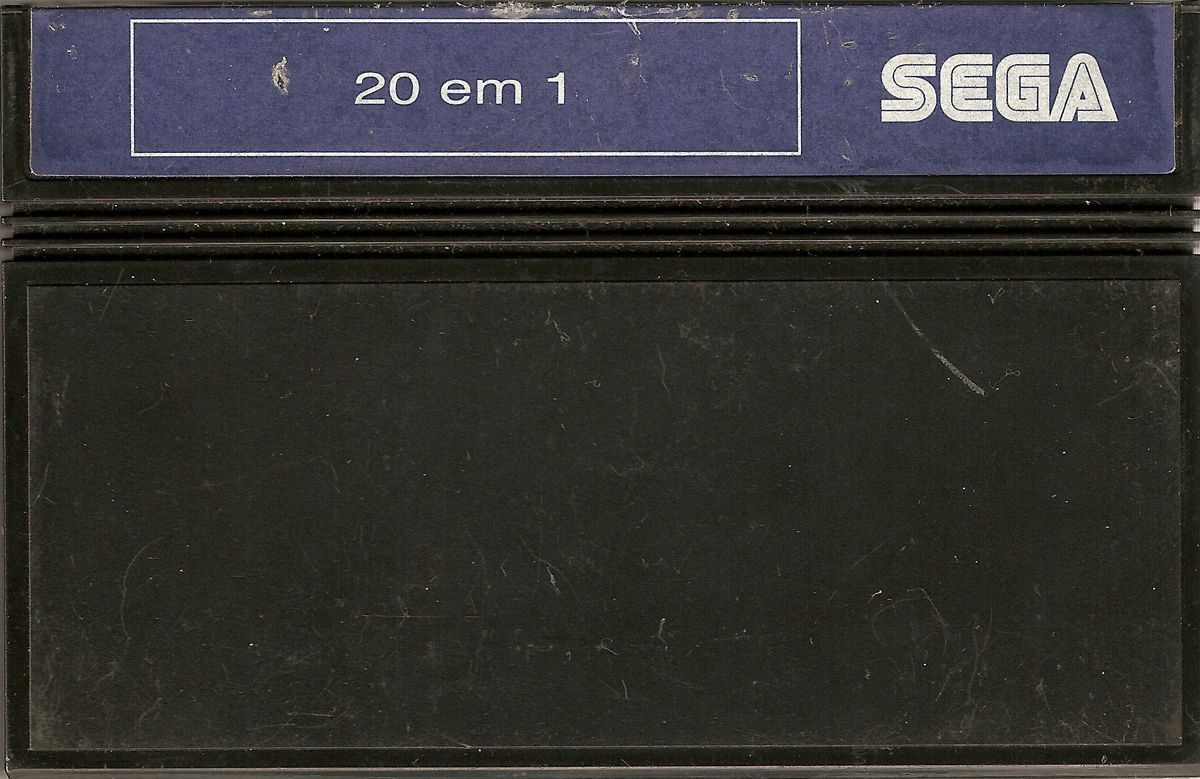

They really pulled out all the stops for this one


You can all rest easy now because I went through the Sega Master System library and found a real stinker. I can finally break up the monotony of reviewing pretty good games. And this is the stinker of the stinkers. It’s the Action 52 of the Sega Master System except with an even weirder backstory. Sure Action 52 is bad, but it was made by some fly-by-night company who knew practically nothing about video games. 20-em-1 was made by Tec Toy. If you are a fan of Master System than you have probably heard of them. No company has ever loved a console as much as Tec Toy loves the Master System, and yes, it is in present tense. They’re the Brazilian company that kept producing games for the Master System until 1998. That’s right up until the end of the Sega Saturn. They were some high-profile releases too. They brought games like Earthworm Jim and Street Fighter II to the Master System. Even their more original games are based on franchises that are popular in Brazil. They released big deal franchises, not lazy shovelware. How much do they love Master System? They never quit supporting it. They quit releasing game regularly in 1998, but they still make and sell Master Systems. Their newest console appears to be a plug-and-play, but it’s still incredible that in 2024 you can still buy Master System products from a real game company. That’s what makes 20-em-1 so inexplicable. How could a company that cares so much put out something of such low quality? That’s a question I don’t really have an answer for.


 20-em-1 was originally released as a pack-in with one of their many console re-releases. This is weird for a couple of reasons. For one it’s about the worst possible showcase for the console. Also, the console already had a game built in. A slightly more well-known game called Sonic the Hedgehog. Why they felt it necessary to include a cart of terrible mini games when the console already had Sega’s signature game built-in is beyond comprehension. It’s like if the NES had come bundled with Super Mario Bros. 3 and Rocky and Bullwinkle. Maybe they wanted to include something easy that the kids could play, because that’s about the only audience I could see for 20-em-1.


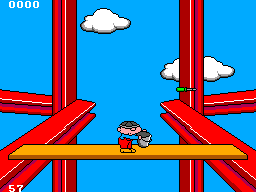
Of course, a multi-cart from the early 90s isn’t expected to have 20 Super Metroids on it, but it’s hard to think of games that offer less. Don’t expect to play most of these for more than a minute. In most of them you either move back-and-forth and catch things or move up-and-down and avoid things. You might know this type of game if you’ve ever played the lowest quality dollar store handheld. I was hoping that the developers actually had twenty ideas for games, but the basic formula rarely changes. In one game you’re a construction worker catching wrenches. In another you’re a mouse catching cheese. In yet another you are a frog catching flies. At least in that one you have to push a button. Actually, I’m pretty sure none of the games used two buttons. I don’t know why they wanted to make 10 terrible rip-offs of Kaboom!, but they did it.
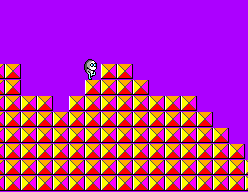


What’s worse is that the games that deviate from the formula are even worse. In most of the games the goal is to reach a target score in less than a minute. However, there were a couple of games that were over in less than ten seconds.  There is a motorcycle game that looked fun, but before I even knew what I was doing I had already won. Why did they make the one game I was interested in only last five seconds? There was a similar situation with a sluggish platformer that made me jump over about three hills before it was over. One of the games is a slow Pong clone that has what looks like a chef hitting a cookie into a stove. Yeah, that one lasts about twenty seconds. Am I getting repetitious? Well, that’s how it feels playing 20-em-1. It’s a compilation of the shortest, simplest games of all time. What am I supposed to say?
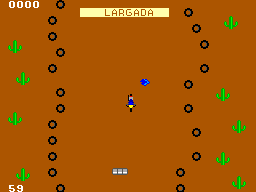


I will say that if you plan on beating it you will only lose about a half hour of your life. Most of the scoring goals are easy to achieve, and some of the more difficult looking games have an easy exploit. Just move your car to the correct spot or stand in one spot and shoot the ever-spawning enemies and you’ll do just fine. It has twenty games that last a minute at the longest with only a handful of them taking more than one try. It’s even hard to go back and improve your scores because the score accumulates every round instead of resetting. So if you want to know if you did better the second time you just have to take your total score and subtract the score you got the first time. I hope you have a calculator. That wasn’t always a given in the mid 90s.


Whatever Tec Toy’s goal was with 20-em-1 it didn’t seem to work. The game is extremely rare and never got a standalone re-release. I guess they were too embarrassed to try to sell it to the masses. It didn’t hurt Tec Toy though. They kept chugging along with Master System re-releases and buried 20-em-1 far down in their biography. I guess they realized that while Sonic the Hedgehog might be difficult, it’s still more fun for kids than slowly catching wrenches. So, no surprise but this game is going low. It’s at the bottom of the Sega Master System list and straddling the line of the offensively bad section. This statement always backfires on me, but I don’t see any SMS game ranking lower. It’s hard to beat 20 bad games all at once. Of course, if there is I will let you know. It’s not only my hobby but my sacred duty.


Sega Master System Quality Percentage: 7/10 or 70%


Sega Master System 

  1. Sonic the Hedgehog 
  2. Alex Kidd in Shinobi World 
  3. Alex Kidd: The Lost Stars 
  4. After Burner 
  5. Alex Kidd in Miracle World 
  6. Aerial Assault 
  7. Alex Kidd: High Tech World 
  8. Ys The Vanished Omens 
  9. Action Fighter 
  10. 20-em-1 

Monday, January 15, 2024

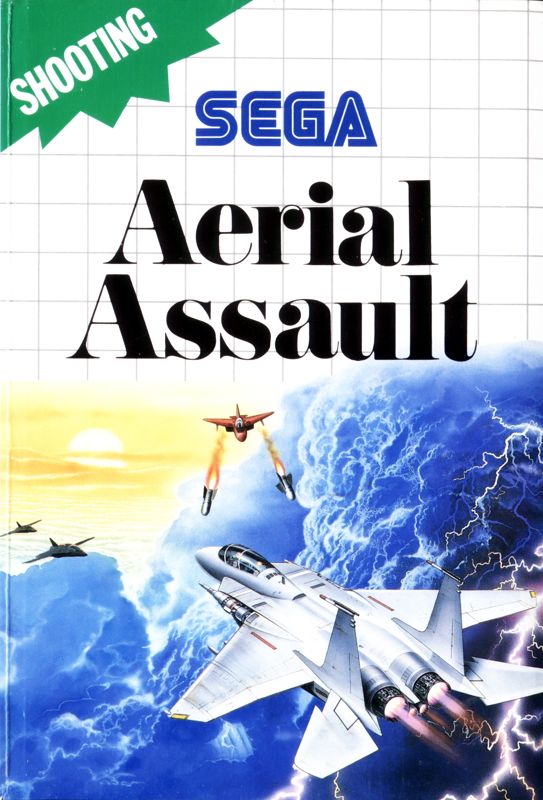
Sega Master System #9: Aerial Assault

: Sanritsu Denki

Publisher: Sega

Release Date: 1990


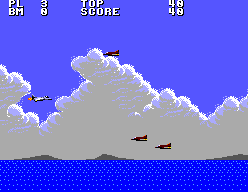
Aerial Assault feel like a bit of an outlier among 90s Master System games. It came out within a year of the Master System’s end in America. Many of the games released around this time were ports of Genesis and NES games with much more familiar counterparts. I already wrote about Sonic the Hedgehog, and there would be several others such as Golden Axe and Castle of Illusion on the horizon. Aerial Assault is certainly one of the least famous later releases. There is a version on Game Gear, but that doesn’t raise its profile much. It’s just a low-key horizontal shooter, and that’s part of the charm. It feels like a game that should’ve come out in 1986 instead of 1990. I don’t mean that as a criticism either. It just feels so familiar. Of course I’ve played thousands of video games at this point,  so probably every game I review is going to feel somewhat familiar. But Aerial Assault is one of those games that brings back memories even though I never played it until a couple years ago. It’s so familiar that it’s a little hard to write about. I feel like I’ve written this review before.


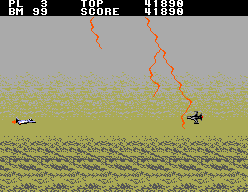
Actually, despite it being a side-scrolling shooter it reminds me of Contra. They both have a vaguely military setting that starts out at least somewhat realistic and then builds into something sci-fi and alien. Aerial Assault also has a couple of similar bosses where you hit the red spot and blow them up piece by piece. A closer influence would probably be Gradius though. Of course what side-scrolling shooter wasn’t influenced by Gradius? I might as well say a platform game was influenced by Super Mario Brothers. Still, the horizontal waves of enemies and frequent power-ups will probably ring a few bells. It also shares the previous games’ difficulty. Aerial Assault lured me in with a false sense of calm with the relatively easy first level, but each level adds more and more enemies until it almost becomes ludicrous. I enjoy intense difficulty in shooters though, and I think that I could at least finish this one on easy mode if I practiced. There are seven continues available, but it still wasn’t enough to get through the whole game.


Actually, my main criticism is also similar to Contra. Aerial Assault has a ton of power-ups, and while this is typically a good thing, all the icons on the screen can mess you up. My strategy with Contra was to find a spread gun and keep it the whole game. All the other power-up icons were downgrades. This can happen in Aerial Assault as well. There will often be clumps of power-up icons appearing at the same time. It’s hard to learn what’s what, so it’s easy to end up with a weapon that you don’t want. I’m not very good at memorizing visual symbols in the first place, so I found it especially confusing. I couldn’t remember which ones were extra ground missiles or pea shooters. There are also a few instant death icons out there. I don’t know who thought that was a good idea, but there are a bunch of old games with instant death power-ups, and nobody liked them. I don’t know why they kept doing it. It’s not like there weren’t enough things in Aerial Assault to kill me.


 I should try not to start ranting too much. Aerial Assault really is an enjoyable shooter. The power-up situation can be a little annoying at times, but it also keeps the game from feeling hopeless. Even completely powered down I never felt like I couldn’t still win. I usually didn’t, but at least I knew I could. So here we have another Sega Master System game that’s going into the good column. I know it’s starting to look like the Master System had the best quality control in history,  but I am cherry picking a bit. I have mostly been focusing on games I already know are good or games I’m not as familiar with over my decades of playing. I’ll get to the bad ones, but it’s hard to play a game I already know I don’t like. It still might have one of the highest quality percentages, but that’s because I don’t imagine any console having that high of a good game count. Also I’ve been trying to review all the games that start with “A” and I ended up liking all the Alex Kidd games. Speaking of Alex Kidd, I’m going to rate Aerial Assault just the same as I rated High Tech World. It’s now #66 right behind Lords of Thunder. I wonder how many SMS games will end up in the lower half of the good section? Only time will tell.


Sega Master System Quality Percentage: 7/9 or 78%


Ranking List.docx

Wednesday, January 10, 2024

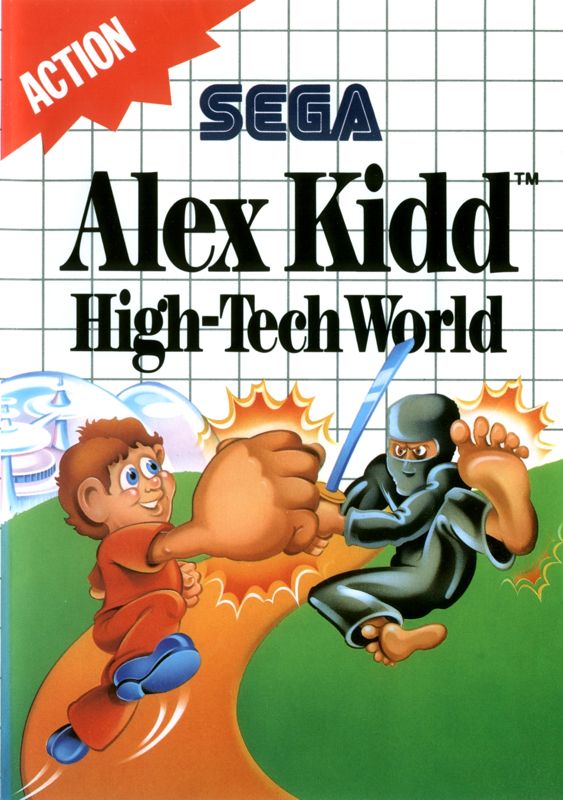
Sega Master System #8: Alex Kidd: High Tech World

Developer: Sega

Publisher: Sega

Release Date: July 1988


 Sega Master System has a relatively small lineup in the United States, and it is a library largely devoid of extremes. Unlike its rival NES, there aren’t a ton of masterpieces or complete disasters. It’s one of the most pleasantly pretty good consoles of all time, and this is one of the reasons I enjoy it so much. It’s not the most fun for reviewers however, so when a bad game is found it tends to really get pummeled. Nobody is going to pass up a chance for a really snarky review. Nobody becomes a critic if they don’t want to be snarky and negative sometimes. So going into Alex Kidd: High Tech World I knew I was playing a game that is largely reviled by modern critics. I think many critics would put it near the bottom of the US library. Well, I’m sorry to disappoint everyone. I really wanted to find this game hilariously bad. Unfortunately, I ended up having quite a bit of fun with High Tech World. It’s just quirky and interesting enough to be a low-key sleeper.


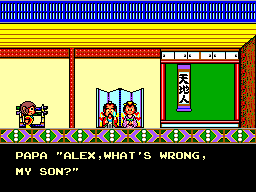
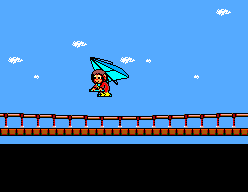
 Alex Kidd: High Tech World is divided into two main sections that don’t play like any other Alex Kidd games. This is one of those Super Mario Bros. 2 situations where the game was originally made as a totally different game in Japan and then changed into an Alex Kidd game for American audiences. I don’t really think this is a bad thing though. Miracle World doesn’t play all uniquely to begin with, and while Lost Stars is a fun game, I didn’t really need another game just like it. It’s always fun to play a black sheep sequel. High Tech World is part adventure game and part ninja side-scroller. In the first section of the game Alex is on a mission to collect pieces of a destroyed map so he can find his way to High Tech World. The title is a bit of a misnomer as there is nothing high tech about Alex’s world. It’s just a place he is trying to go to that we never get a good look at. The actual environments are a low-key castle, ninja-infested forest, and pointless small town. It’s a bit less exciting than some kind of futuristic side-scroller, but it works.


 I enjoyed the adventure section of the game, but I can see why people might get a bit turned off. Alex only has one life in this section, and certain mistakes will lead to instant death. It makes sense that an electric shock might kill, but it’s a bit more ridiculous with something like forgetting to pick up an item or meeting your friend too late. Embarrassment is just as deadly as the sharpest ninja star in this game. I didn’t mind this very much, however, because the adventure section is relatively short, and some of the deaths are kind of funny. They were going for a funny tone, so absurd deaths fit the overall premise. Besides, there is a time limit for finding all the map pieces so it will take several tries. You’re supposed to die a bunch of times in adventure games. I had a lot of fun solving the puzzles and trying to do it as quickly as possible. Nothing was too hard to solve, but there was one section which required me to go in and out of a room several times to get the necessary characters to show up. Since going into rooms takes the most time off the clock it might not be something the average person would try. Most of it made sense though, and it was a fun little adventure for 80s console players who weren’t too familiar than the genre.


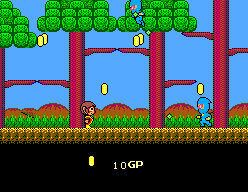
 The second half is mostly a side-scrolling forest with a small town in the middle. The platforming was difficult and fun in that old school way. There is a password for this part of the game and continues are allowed. The clock becomes a non-factor as it only progresses a minute or so for each life lost. This was much appreciated as progress was slow, but I always felt like I was doing a bit better. Alex throws ninja stars in this one, which is an improvement over his short punch in my opinion. The town is fairly useless outside of collecting a vital item. You earn money and can buy things, but I couldn’t find any use for them. To get the needed item you have to pray at the shrine 100 times. This sounds tedious, but it really didn’t take very long. I’m not sure if I did something to shorten it, but it felt more like thirty times.


Overall, I was charmed by this quirky game. The gameplay was fun and refreshingly different. It’s obvious that it was not originally an Alex Kidd game, but that doesn’t bother me. It was fun having so many characters to interact with even if they aren’t in any other Alex Kidd games. It’s also supposed to be funny and absurd, so I didn’t mind it when the game pulled my leg a little. It made me smile much more than it frustrated me, and it has a ton of personality for an SMS game. So yeah, I’ll put it in the good section. It’s #66 overall just behind Lords of Thunder (Sega CD). It’s the lowest ranked of the SMS Alex Kidd games, but it’s still worth playing. It’s interesting that I’ve now covered all the North American Alex Kidd games not counting the 2021 reboot. I haven’t finished reviewing any series yet, and Alex Kidd is just the type of oddity that appeals to me. So sorry gaming fans, no Mega Man reviews yet, but you can read all about Alex Kidd.


 Sega Master System quality percentage: 6/8 or 75%


Sega Master System 

  1. Sonic the Hedgehog 
  2. Alex Kidd in Shinobi World 
  3. Alex Kidd: The Lost Stars 
  4. After Burner 
  5. Alex Kidd in Miracle World 
  6. Alex Kidd: High Tech World 
  7. Ys The Vanished Omens 
  8. Action Fighter 

Tuesday, January 2, 2024

Atari 2600 #19: Pac-Man

Developer: Atari

Publisher: Atari

Release Date: 3-16-82


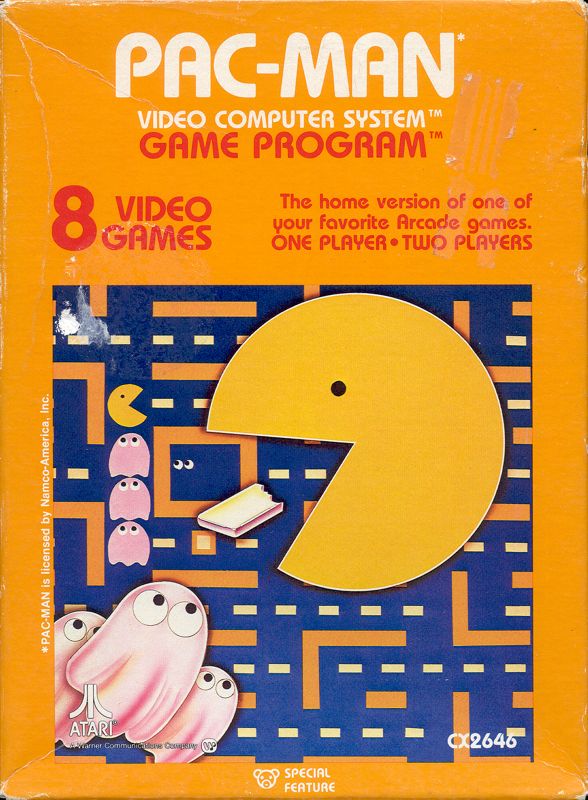
 If you know anything about gaming in the pre-NES days than you probably already know that Pac-Man on the 2600 is notorious, often considered to be one of the most disastrous video game releases of all time. It’s often credited, along with E.T., as destroying not only the Atari 2600 but the entire American gaming industry. It’s also the best-selling game Atari ever released to the home market. It sold around 8 million copies when there were only around 9 million consoles sold. It’s hard to imagine a video game owned by almost 90% of a console’s users, but this is how much faith Atari had in Pac-Man. Atari never marketed a game so heavily, and never had more confidence. The old legends states that they produced 12 million copies in the expectation that Pac-Man would get people to buy a console the same way Space Invaders had a couple years previously. It’s one of those game like Super Mario Bros./Duck Hunt that even if you’ve never played a video game in your life you will inexplicably find a copy of it when you’re cleaning out your attic. So how does Atari’s biggest and most important release up to that point end up going so horribly wrong? Well, that’s the story Atari fans have been trying to figure out for the last forty years.


 Since you already know what Pac-Man is like I’m going to speculate just a bit. Hey, it’s what Atari fans do. Pac-Man is a deceptively simple game. It has one map, a bunch of dots, some ghosts, one fruit per level, and Pac-Man himself. It just doesn’t sound that difficult to reproduce. By this point Atari had started to develop a reputation for respectable home ports. Their port of Space Invaders was home gaming’s first major hit, and they had also recently been making high quality versions of their own arcade games like Asteroids and Missile Command. Unfortunately, technology moves quickly, and the 2600 was nearly five years old by the time they tried to port Pac-Man. That’s usually around the time a company starts planning to upgrade to a new console. Atari would do that with the 5200 later in the year, so they knew they weren’t going to be able to get by on 1977 technology for much longer. Pac-Man was so complicated that developer Tod Frye had to make concessions just about everywhere. By all accounts the game was worked on extremely hard. It wasn’t quite the rush job that E.T. was. Frye put in everything he had hoping for a miracle. He ended up with a miracle, but only a miracle for video game writers. It’s one of the rarest of all video games. Pac-Man is an arcade port that gets almost nothing right. It is the most spectacular kind of failure that will still be talked about for generations. Am I being too harsh? Well, let’s look at the details.


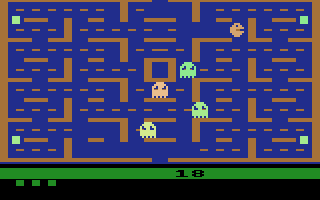
Close your eyes and think of Pac-Man for a moment. What do you see? I bet even if you only have a passing interest in video games you can picture it. It’s all about that iconic blue maze and solidly colored ghosts. There is only one maze, but it’s designed well enough that it’s always fun to traverse. Pac-Man has that constantly flapping mouth with his iconic waka-waka sound. There’s the iconic fruit that changes every level. Everybody loves that fruit. Even the smaller details, like the placement of the teleporter holes, are iconic. Well, Atari 2600 Pac-Man has almost none of these things. The color scheme is all messed up with a weird brownish color replacing the iconic blue and constantly flickering, pale ghosts that mostly look the same. Pac-Man’s mouth opens straight up and down instead of triangular, and the waka-waka is replaced with more of a generic Atari bloop. The fruit has been replaced by a big rectangle. Even the scoring is off. The last zero was taken off the scores which means all the points are divided by ten. Single dots are only worth one point and you know how much I hate things only being worth one point. One of two major changes from the arcade game would be alright, but it’s the fact that everything is different that really hurts. The only thing worse would be if the maze was completely ruined. Well I’m happy to say that in this version the maze is in fact completely ruined. Hey, bad things can make me happy too.


If your game only has one screen than it better be a great screen. Pac-Man manages this by having a classic maze full of twists and turns that takes longer to learn than it appears. Strategies will change depending on where you are and what the ghosts are up to. The Atari version eliminates the challenge of the maze by replacing practically everything with uninspired rectangle loops. It really is one of the most boring mazes I have ever seen. There’s no strategy here. Just move around in your little rectangles and try to stay away from ghosts. There are a couple of lanes where you can go all the way from bottom to top, but something about this feel weird and I can’t quite explain it. The maze doesn’t make the game unplayable, but it sure makes it dull. If you’re putting everything you have into the most important game you’ve ever made than you sure don’t want it to be boring. How depressing is it that all the concessions made to get the game on console didn’t help make it any more fun. Everything was stripped away and it still ended up slow and boring. You can ruin the graphics and mostly get away with it, but ruin the gameplay and the battle is lost.


It’s not hard to see why this game left a bad taste in people’s mouths in 1982. Atari released several other versions of Pac-Man on other consoles in 1982-1983, and this might’ve even made things worse. All of Atari’s other versions were much more faithful to the original, including one on the competing Intellivision console. Did Atari just not care about their main user base anymore? Why is the one they actually expected to sell end up so bad when versions on lesser-known consoles fare so much better? It almost feels like one of those conspiracy moments where they released a bad version on their old console to get people to buy the better version on 5200. Of course, if that were the case, they wouldn’t have made millions upon millions of Pac-Man carts. No, it’s just the typical depressing reason. The money was more important than the quality, so it was released even though it obviously wasn’t very fun.


So now it’s time to rate this thing, and I don’t think it’s going to go quite as low as I expected. It’s dull but not egregiously awful. It still has a passing resemblance to the real thing, so it’s not completely devoid of entertainment value. I hesitate to call it fun, but it’s definitely disappointing. It’s certainly helping me meet my quota for adverbs at least. I can’t quite bump it up into the okay section, but it’s not the lowest ranked Atari game either. I’m putting it at #129 overall which puts it right above Space Jockey. Two spaces down and it would’ve ended up in the shockingly bad section. Hey, I’m not mad Pac-Man, just very disappointed. 

Tuesday, December 5, 2023

Sega CD #4: Shining Force CD

Developer: Sonic Co

Publisher: Sega

Release Date: 1995


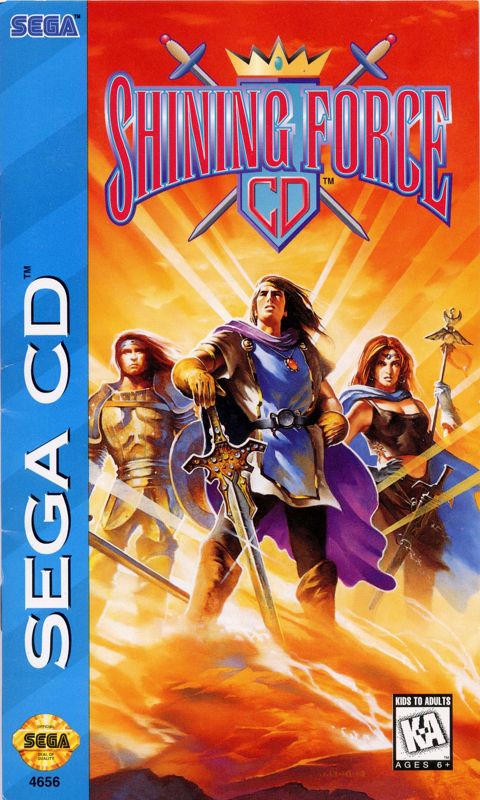
 Now here’s a game that made me want to track down a Sega CD. The two Shining Force games on Sega Genesis were wonderful tactical RPGs that made people like me lifelong fans of the genre. Unfortunately, there did not end up being very many Shining Force games, especially in America. Other than the two Genesis games there is one on Game Gear, a super rare Sega Saturn sequel ,and at least one remake which appeared on Game Boy Advance. Fans of the Force games were also teased over and over again with Shining-titled games that were not tactical. Seriously, there’s like 20 Shining games, and nobody liked any of them as much as the two Genesis Shining Force games. So why aren’t there more Shining Force games? Maybe it’s because Sega of America kept waiting until the last minute to release them. Both Shining Force CD and Shining Force III were among the very last games released for their respective consoles in America, which almost guaranteed that they would not sell.  I wanted to play Shining Force III more than anything in 1998, but I wasn’t going to buy a Saturn when the console was pretty much dead. Considering this, Shining Force felt like one of the first franchises whose demise felt like an inside job. Maybe with more love they would still be released Shining Force games, but they were destined to be ultra-rare curiosities. Of course, just about every game on Sega CD is a curiosity, so how does Shining Force CD stack up?


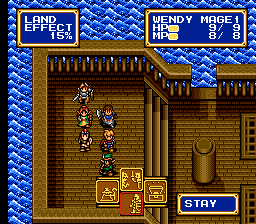
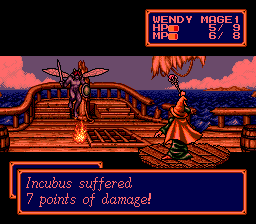
Well, I’m happy to say that for once Sega CD mostly delivered the goods. If you love tactical RPG battles than there’s nothing more robust from the whole 16-bit era as far as I know. It feels like there are more battles in Shining Force CD than the two Genesis titles combined. We’re talking over 60 battles, and somehow they never get tedious.  Most of the RPG elements are gone, however. There’s no overworld or towns to visit. It’s just battle, story, preparation, and more battle. This is probably a more common setup for tactical RPGs, but it does lose a little of that made the games stand out. Still, it’s hard to complain too much when the battles are so much fun. It has vintage grid based, single unit tactical combat. I always enjoyed the Shining Force games more than Final Fantasy Tactics because all the units are specific characters. There are no generic units to choose from, and even without as much interaction they feel like unique characters. There are more characters than slots in your party, so it becomes about building them up and picking who works the best. I love this kind of stuff. One oddity is that many of the character names are the same as in Shining Force II despite being used for different characters. I believe the names actually appeared here first, but I’m so attached to Shining Force II that it’s hard for me to accept a different Chester, Sara, and Jaha. So how could the names be in Shining Force CD first when it came out after Shining Force II? The answer to that question is the one thing that keeps Shining Force CD from being a complete slam dunk.


Shining Force CD is actually four different games put together. The first two scenarios are remakes of Game Gear Games. The first one never made it to America, but the second one was released in the states as Shining Force: The Sword of Hajya on Game Gear. The third and fourth scenarios are original to the Sega Cd title, but they are much shorter than the first two. The fourth scenario is even hidden, and you wouldn’t even know how to find if you didn’t know it was there. I didn’t know it existed until it was too late, and I missed the event that triggered it. I already played The Sword of Hajya many years ago, but I don’t really mind playing through the battles again. Of course, it has better graphics and added CD pizzazz, and since the battles are tactical, they are always going to play a little bit differently every time. The downside is that for each scenario the game basically starts over. This means that there is much less character building than in the other games. It’s not very difficult to max out the characters’ levels, and it never gets particularly difficult. I know that at least in the third scenario I could keep leveling up the characters, but they stopped getting stat increases after level 20. That’s a little disappointing for someone who loves character building and level grinding as much as I do.


Still, having four games in one certainly showed off what CD-ROM technology was capable of. There is a lot of game on this disk, plus a compelling story that does mostly tie it all together into one narrative. This is the first Sega CD game I’ve played for this project that couldn’t be done on a console in a good way. It’s not full of FMV gimmicks, and it doesn’t feel like a standard Genesis game with a few cut scenes and better sound. It has some cut scenes and better sound, but it mostly impresses because there’s just so much well-crafted game. I’m sure you’re already tired of hearing me say this four reviews in, but this is the type of game that Sega should’ve concentrated on for the Sega CD. This should not have been quietly released at the end of the console’s life and relegated to obscurity. Oh well, I’m sure they’ll fix their mistakes with the Sega Saturn. That worked out, right?


Shining Force CD is all the way up at #13, which feels somewhat appropriate to me. Not only was this game practically ignored despite being great, but it was also released right at the beginning of Sega’s sudden and depressing decline. In the US it came out almost halfway between the release of the 32X and Saturn, and these back-to-back disappointments would just about doom Sega’s future as a console maker. Of course, Sega would find a successful second life as a publisher for other consoles and survives in this capacity to this day, but Shining Force CD is a tiny glimpse into what could’ve been.


Sega CD Quality Percentage 2/4 or 50%


Sega CD


1. Shining Force CD

2. Lords of Thunder

3. Vay

4. Panic!

Sunday, November 26, 2023

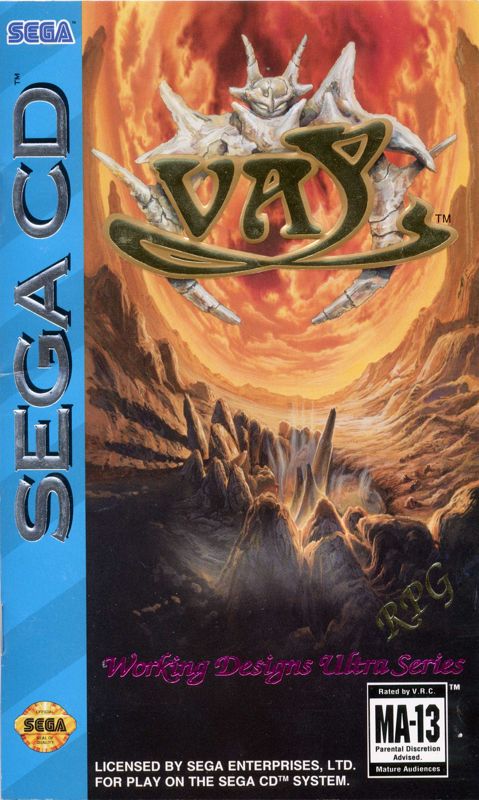
Sega CD #3: Vay

Developer: SIMS

Publisher: Working Designs

Release Date: 10-22-93


 I shouldn’t have waited so long after playing Vay to finally get around to writing about it. It just doesn’t want to stick around in my brain. I’m not overly surprised. My brain is crammed full of knowledge, so it can’t be too comfortable up there. It makes sense that a less than memorable game would want to get out as quickly as possible. I remember seeing ads for Vay in magazines in the early 90s and really wanting to play it. There weren’t that many options for an RPG fan at the time, so any hint of a new RPG was exciting, even on a weird add-on that I wasn’t even convinced actually existed. Vay is one of the dozen or so obscure RPGs on Sega CD that make it so appealing to collectors. I know when I finally got my Sega CD I wanted to track them all down more than anything. Sadly, they were expensive fifteen years ago and have only gone up in price. Well I was finally able to play it, and it’s probably no surprise that it wasn’t all I expected to be. It’s not even pronounced the way I always expected. It’s pronounced Vai as in guitar virtuoso Steve Vai. You know, the legendary guitar player who was in Whitesnake for like ten minutes and because of it became a plot point on Salute Your Shorts. If you’re the average person of around my age that’s probably the only thing you know about Steve Vai. See, I’m already getting sidetracked into talking about 80s guitar players because Vay just isn’t that memorable. When a game is as vanilla as this one it’s the flaws that tend to stick out, and Vay certainly has its fair share.


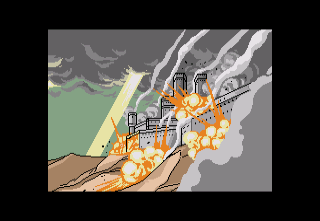
 Vay is about as basic JRPG as it gets. Being staunchly traditional can be good for a JRPG, but there’s just nothing about the mechanics in Vay that make it rise above mediocrity. Sure, some of the advanced features are nice. It features nice looking cutscenes peppered throughout, and there is a good amount of mostly decent voice acting, but most of the game looks like your standard second-string Genesis RPG. It’s just too full of green fields, yellow deserts, and slate-grey caves. Very little of it stands out. The dungeons and bosses are fairly generic, so it really does feel like a game only for RPG obsessives like me who just have to play them all.


 The combat is what really brings the game down. When done right turn-based combat can be the best combat around. It’s all about planning and strategy. In Vay it’s all about attacking and attacking and hoping you don’t have to waste too much MP. For some reason the developers decided that instead of making monsters more difficult throughout the game they would instead just make attacks do very little damage. It felt like the farther into the game I got the less damage I was doing. Even getting more powerful weapons didn’t help much. This led to battles that were boring slogs instead of fun challenges. The only way to do much damage later in the game is from the one good magic user. Of course, since this speeds the game up and makes battles more interesting, they make this tedious too. There just aren’t any clear ways to recover MP with the one exception of gaining levels. Vay has another Great Greed situation where it becomes all about timing level gains. The difference is that where Great Greed was weird and interesting, Vay is dull and predictable. So, get ready to fight a bunch of boring battles for minimal gains while waiting to level up so you can take on a boss. It’s not a fun system.


This is another situation where I can’t figure out what other critics are seeing that I am missing. Both contemporary and modern reviews are mostly positive. Of course what critics liked in 1993 is probably the thing that gets criticized the most in 2023. Working Designs became infamous for their odd translations featuring numerous Americanisms and pop culture references. It’s surprising how much juvenile humour is in such a serious game. Of course, in 1993 critics loved it. They called it some of the most sophisticated dialogue ever in a game. That’s a bit odd in a game with so many Wayne’s World reverences and fart jokes. Sometimes this is fun, like when they reference something more obscure like Kraftwerk, but it can be jarring. Of course, I can see the reasoning behind it. The game has a decent story, but it’s a bit dry. Working Designs wanting something that would stand out more. It certainly worked at the time, but games and their reviewers have aged thirty years. It’s not quite as extreme as some of their other translations, but people certainly complain about this sort of thing today. They want authenticity, and I don’t blame them.


 I know I’ve been criticizing Vay a lot, but after reading so many reviews and waiting so long to play it I had high expectations. I just couldn’t believe that it would end up being so average. I was hoping that Vay would push Sega CD into the positive, but Vay is the definition of an okay game. It’s the type of game that is made for the purple section. Yes, that does mean that Gopher and Bible Buffet are going above it, but even I can’t let a mediocre RPG slide through based on genre alone. I did like it better than any of my other purple games, so it’s now the best okay game I have played. My list is really starting to get strange, but I suppose that’s the hazard of ranking every game I can get my hands on. Luckily, the Sega CD list is much easier so far. I have one good one, one okay one, and one bad one. I have a feeling that this is going to be a trend for Sega CD. There are around 150 games on the system, so I’d be very happy if 50 of them are good. Is that too much to ask? I’m just an optimist like that.


Sega CD quality percentage: 1/3 or 33.33%


Sega CD Rankings

 1. Lords of Thunder

2. Vay

3. Panic! 

Saturday, November 25, 2023

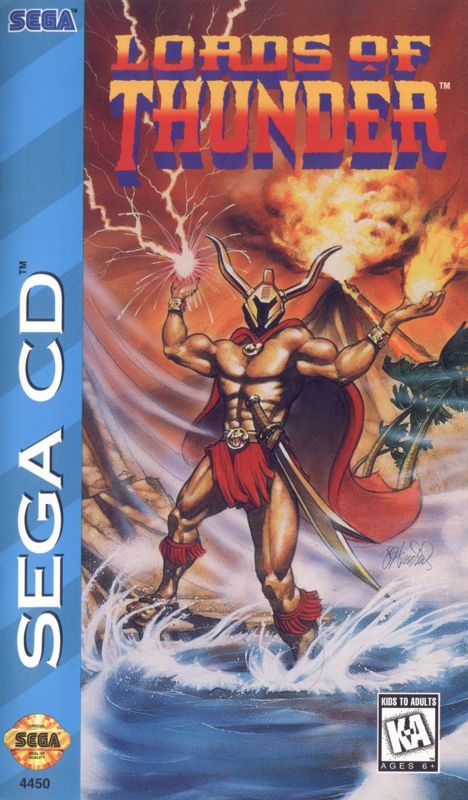
Sega CD #2: Lords of Thunder

Developer: Red Company/Hudson

Publisher: Hudson Soft

Release Date: March 1995


If you feel like I wrote about this game already, don’t worry this is an all-new review. Unless this is the future and you’re reading this same review again. I’m sure it’s a good one and well worth re-reading. Anyway, I never quite know what to do with games released on multiple consoles. If I want to truly rank every game on a specific console it’s something that I am going to have to deal with. There are probably at least 250 games that are essentially the same on Super Nintendo and Genesis. Which one do I focus on? Do I review them both at the same time? Can I write ten different essays on the game Zoop? Perhaps it is something I will confront in the near future, but the decision is easier when two versions of the same game are different. That’s what the case is here. I also wanted to get back to Sega CD. The only Sega CD game I have rated so far is Panic!, and I hate to leave things on such a sour note. I figured rating a game I already like on another console would be a good way to get Sega CD in the win column. So just how does Lords of Thunder’s odd Sega cousin measure up to the original?


 Well, it’s a bit of a mixed bag. One thing the Sega CD versions has is an even more extreme rarity. This was one of the very last games released for the Sega CD, so it didn’t have a giant release in the first place. A boxed copy sells for over $300 these days, which is a bit high if we’re being honest. I have no idea why Hudson decided to port it to Sega CD two years after the original came out. They went from an extremely obscure console to a dying one. They should’ve just waited a few months and released it on PlayStation.


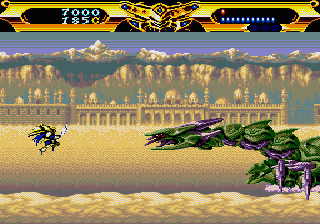
Despite the later release date, however, everything seems to be toned down in the Sega CD version. The graphics aren’t as nice, the music is too quiet, and it is slower in general. I can’t stand how you freeze for a few seconds when the TurboGrafx CD version was seamless. There is a tiny amount of voice acting in this version, but that’s the only thing that could really be seen as an upgrade and is seriously only a few seconds of voices. Cosmetic differences don’t necessarily damage the quality of a port, but there are a couple of things that really bug me in Lords of Thunder. In the TurboGrafx CD version, enemies would blink when hit in their weak spot. The game is full of unique enemies that take multiple hits, so it’s important to know what attacks are doing damage. They don’t always have a big red spot to shoot at, so you can’t really tell where to shoot just by looking. There were also some obstacles that can be destroyed and some that can’t be. Thanks for the no help, Sega CD. At least the bosses still flash when hit. It’s not a game breaker, but it is an annoyance.


 The most shocking difference, however, is the lowered difficulty. I will admit that I was only playing on normal difficulty, but I was playing it just to try it out and ended up beating the game. I know that I had been practicing on the TurboGrafx CD version, so it wasn’t a completely blind playthrough, but I’m not eve good at shooters. If you are a big shooter fan than the lower difficulty is disappointing. It just doesn’t have the pulse-pounding lunacy of the original.


I’m still going to put this one slightly into the good column though. It still has the great level design and money system of the original. It’s a bit more laid back, but there is enough challenge for it to not get boring. It’s not so much “Lords of Thunder” as “People Who Somewhat Control Thunder”, that still makes it fairly powerful. Sega CD should be remembered for its great shooters and RPGs instead of cheesy FMV games and failed multimedia experiments, and while Lords of Thunder isn’t a great game on Sega CD, it’s still a worthy addition to the library.


 I am going to rank Lords of Thunder at #64 just below the wonderfully kooky Ninja Golf. It’s just above Splatterhosue II which I don’t even remember playing. I must’ve enjoyed it, but I couldn’t even remember what console it was on. At least I will always remember Lords of Thunder was a Sega CD game. And you know what, being a Sega CD game isn’t a bad thing at all. Hopefully the console will have enough pleasant surprises to be worth playing.


Sega CD Quality Percentage: 1/2


Sega CD Rankings

 1. Lords of Thunder

2. Panic! 


Ranking List.docx