Sunday, November 26, 2023

Sega CD #3: Vay

Developer: SIMS

Publisher: Working Designs

Release Date: 10-22-93
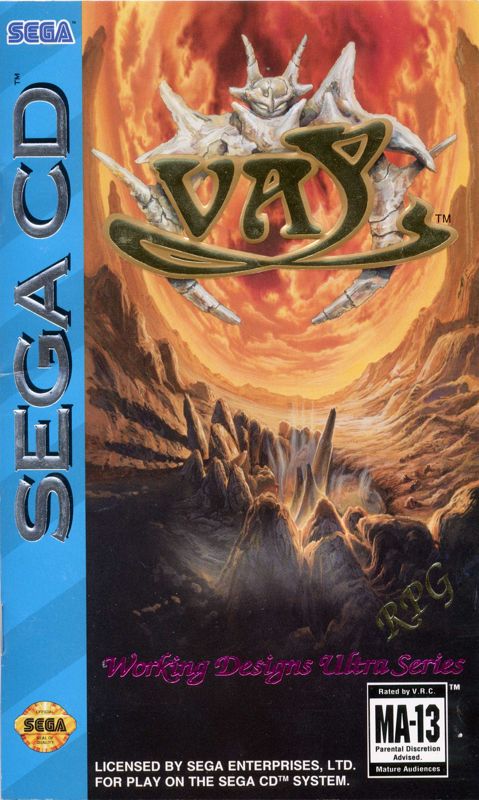


 I shouldn’t have waited so long after playing Vay to finally get around to writing about it. It just doesn’t want to stick around in my brain. I’m not overly surprised. My brain is crammed full of knowledge, so it can’t be too comfortable up there. It makes sense that a less than memorable game would want to get out as quickly as possible. I remember seeing ads for Vay in magazines in the early 90s and really wanting to play it. There weren’t that many options for an RPG fan at the time, so any hint of a new RPG was exciting, even on a weird add-on that I wasn’t even convinced actually existed. Vay is one of the dozen or so obscure RPGs on Sega CD that make it so appealing to collectors. I know when I finally got my Sega CD I wanted to track them all down more than anything. Sadly, they were expensive fifteen years ago and have only gone up in price. Well I was finally able to play it, and it’s probably no surprise that it wasn’t all I expected to be. It’s not even pronounced the way I always expected. It’s pronounced Vai as in guitar virtuoso Steve Vai. You know, the legendary guitar player who was in Whitesnake for like ten minutes and because of it became a plot point on Salute Your Shorts. If you’re the average person of around my age that’s probably the only thing you know about Steve Vai. See, I’m already getting sidetracked into talking about 80s guitar players because Vay just isn’t that memorable. When a game is as vanilla as this one it’s the flaws that tend to stick out, and Vay certainly has its fair share.


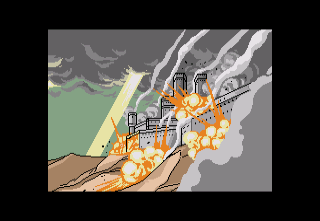
 Vay is about as basic JRPG as it gets. Being staunchly traditional can be good for a JRPG, but there’s just nothing about the mechanics in Vay that make it rise above mediocrity. Sure, some of the advanced features are nice. It features nice looking cutscenes peppered throughout, and there is a good amount of mostly decent voice acting, but most of the game looks like your standard second-string Genesis RPG. It’s just too full of green fields, yellow deserts, and slate-grey caves. Very little of it stands out. The dungeons and bosses are fairly generic, so it really does feel like a game only for RPG obsessives like me who just have to play them all.


 The combat is what really brings the game down. When done right turn-based combat can be the best combat around. It’s all about planning and strategy. In Vay it’s all about attacking and attacking and hoping you don’t have to waste too much MP. For some reason the developers decided that instead of making monsters more difficult throughout the game they would instead just make attacks do very little damage. It felt like the farther into the game I got the less damage I was doing. Even getting more powerful weapons didn’t help much. This led to battles that were boring slogs instead of fun challenges. The only way to do much damage later in the game is from the one good magic user. Of course, since this speeds the game up and makes battles more interesting, they make this tedious too. There just aren’t any clear ways to recover MP with the one exception of gaining levels. Vay has another Great Greed situation where it becomes all about timing level gains. The difference is that where Great Greed was weird and interesting, Vay is dull and predictable. So, get ready to fight a bunch of boring battles for minimal gains while waiting to level up so you can take on a boss. It’s not a fun system.


This is another situation where I can’t figure out what other critics are seeing that I am missing. Both contemporary and modern reviews are mostly positive. Of course what critics liked in 1993 is probably the thing that gets criticized the most in 2023. Working Designs became infamous for their odd translations featuring numerous Americanisms and pop culture references. It’s surprising how much juvenile humour is in such a serious game. Of course, in 1993 critics loved it. They called it some of the most sophisticated dialogue ever in a game. That’s a bit odd in a game with so many Wayne’s World reverences and fart jokes. Sometimes this is fun, like when they reference something more obscure like Kraftwerk, but it can be jarring. Of course, I can see the reasoning behind it. The game has a decent story, but it’s a bit dry. Working Designs wanting something that would stand out more. It certainly worked at the time, but games and their reviewers have aged thirty years. It’s not quite as extreme as some of their other translations, but people certainly complain about this sort of thing today. They want authenticity, and I don’t blame them.


 I know I’ve been criticizing Vay a lot, but after reading so many reviews and waiting so long to play it I had high expectations. I just couldn’t believe that it would end up being so average. I was hoping that Vay would push Sega CD into the positive, but Vay is the definition of an okay game. It’s the type of game that is made for the purple section. Yes, that does mean that Gopher and Bible Buffet are going above it, but even I can’t let a mediocre RPG slide through based on genre alone. I did like it better than any of my other purple games, so it’s now the best okay game I have played. My list is really starting to get strange, but I suppose that’s the hazard of ranking every game I can get my hands on. Luckily, the Sega CD list is much easier so far. I have one good one, one okay one, and one bad one. I have a feeling that this is going to be a trend for Sega CD. There are around 150 games on the system, so I’d be very happy if 50 of them are good. Is that too much to ask? I’m just an optimist like that.


Sega CD quality percentage: 1/3 or 33.33%


Sega CD Rankings

 1. Lords of Thunder

2. Vay

3. Panic! 

Saturday, November 25, 2023

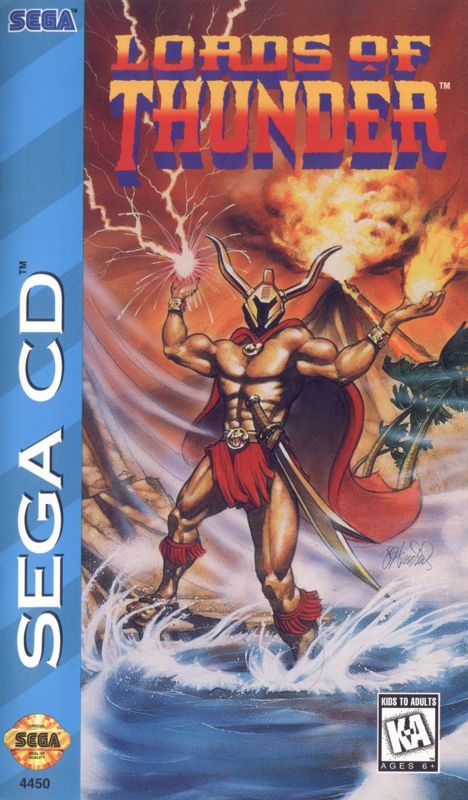
Sega CD #2: Lords of Thunder

Developer: Red Company/Hudson

Publisher: Hudson Soft

Release Date: March 1995


If you feel like I wrote about this game already, don’t worry this is an all-new review. Unless this is the future and you’re reading this same review again. I’m sure it’s a good one and well worth re-reading. Anyway, I never quite know what to do with games released on multiple consoles. If I want to truly rank every game on a specific console it’s something that I am going to have to deal with. There are probably at least 250 games that are essentially the same on Super Nintendo and Genesis. Which one do I focus on? Do I review them both at the same time? Can I write ten different essays on the game Zoop? Perhaps it is something I will confront in the near future, but the decision is easier when two versions of the same game are different. That’s what the case is here. I also wanted to get back to Sega CD. The only Sega CD game I have rated so far is Panic!, and I hate to leave things on such a sour note. I figured rating a game I already like on another console would be a good way to get Sega CD in the win column. So just how does Lords of Thunder’s odd Sega cousin measure up to the original?


 Well, it’s a bit of a mixed bag. One thing the Sega CD versions has is an even more extreme rarity. This was one of the very last games released for the Sega CD, so it didn’t have a giant release in the first place. A boxed copy sells for over $300 these days, which is a bit high if we’re being honest. I have no idea why Hudson decided to port it to Sega CD two years after the original came out. They went from an extremely obscure console to a dying one. They should’ve just waited a few months and released it on PlayStation.


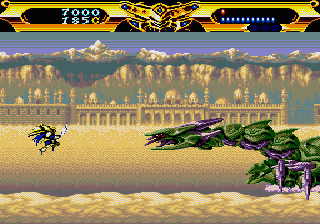
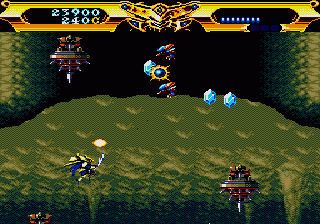
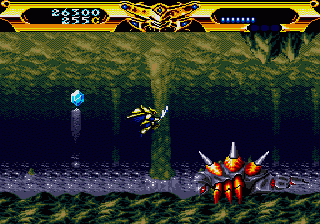
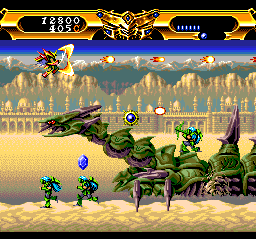
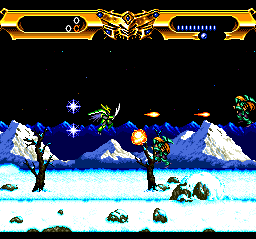
Despite the later release date, however, everything seems to be toned down in the Sega CD version. The graphics aren’t as nice, the music is too quiet, and it is slower in general. I can’t stand how you freeze for a few seconds when the TurboGrafx CD version was seamless. There is a tiny amount of voice acting in this version, but that’s the only thing that could really be seen as an upgrade and is seriously only a few seconds of voices. Cosmetic differences don’t necessarily damage the quality of a port, but there are a couple of things that really bug me in Lords of Thunder. In the TurboGrafx CD version, enemies would blink when hit in their weak spot. The game is full of unique enemies that take multiple hits, so it’s important to know what attacks are doing damage. They don’t always have a big red spot to shoot at, so you can’t really tell where to shoot just by looking. There were also some obstacles that can be destroyed and some that can’t be. Thanks for the no help, Sega CD. At least the bosses still flash when hit. It’s not a game breaker, but it is an annoyance.


 The most shocking difference, however, is the lowered difficulty. I will admit that I was only playing on normal difficulty, but I was playing it just to try it out and ended up beating the game. I know that I had been practicing on the TurboGrafx CD version, so it wasn’t a completely blind playthrough, but I’m not eve good at shooters. If you are a big shooter fan than the lower difficulty is disappointing. It just doesn’t have the pulse-pounding lunacy of the original.


I’m still going to put this one slightly into the good column though. It still has the great level design and money system of the original. It’s a bit more laid back, but there is enough challenge for it to not get boring. It’s not so much “Lords of Thunder” as “People Who Somewhat Control Thunder”, that still makes it fairly powerful. Sega CD should be remembered for its great shooters and RPGs instead of cheesy FMV games and failed multimedia experiments, and while Lords of Thunder isn’t a great game on Sega CD, it’s still a worthy addition to the library.


 I am going to rank Lords of Thunder at #64 just below the wonderfully kooky Ninja Golf. It’s just above Splatterhosue II which I don’t even remember playing. I must’ve enjoyed it, but I couldn’t even remember what console it was on. At least I will always remember Lords of Thunder was a Sega CD game. And you know what, being a Sega CD game isn’t a bad thing at all. Hopefully the console will have enough pleasant surprises to be worth playing.


Sega CD Quality Percentage: 1/2


Sega CD Rankings

 1. Lords of Thunder

2. Panic! 


Ranking List.docx

Thursday, November 16, 2023

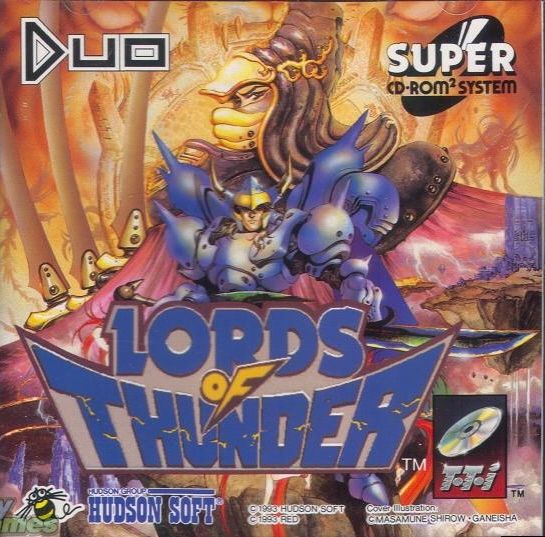
TurboGrafx CD #2: Lords of Thunder

Developer: Red Company

Publisher: Hudson Soft

Release Date: March 1993


Lords of Thunder will always be one of my go-to games when I am feeling down, although it might not fit the typical mold for feel good gaming. It’s not a cozy, comfort food-type game. It’s not full of familiar tropes and mechanics that make me feel like a kid again. It’s also not a game I grew up with. I never played Lords of Thunder until I was an adult living on my own. It’s not a time I look back on with particular fondness apart from the extra money I had to spend on rare games. Lords of Thunder cheers me up for a completely opposite reason. Sometimes when I am feeling down, I want to play something that is so ridiculous and intense that it destroys all rational thought. Lords of Thunder is one of the most over-the-top horizontal shooters of the 16-bit era. In modern times, horizontal shooters only exist to be ridiculous. In 1993 the genre was more grounded, so a game like Lords of Thunder stood out by the sheer number of enemies and obstacles on the screen. This is not a game that would’ve worked as well on Super Nintendo or Sega Genesis. It certainly made me happy that I spent $500 on that TurboDuo back in 2007. Hey everything else about this game is over-the-top. Of course, the price is going to be as well.


What really makes Lords of Thunder great, however, is that in spite of the over-the-top intensity, it is still a very playable game. It’s not like so many difficult shooters where you’ll only ever see the first minute of the first level and give up. You are able to choose what order you play the levels and one of four elemental-based armors which will provide your weapons. Se even if you are bad, you will at least see what all the levels are like. Different armors are better in different situations, so there are plenty of combinations to try out. I don’t always make a ton of progress when I play, but I always have fun trying different armors in different levels. There is also a store where you can buy energy, shields, elixirs, and perhaps most importantly, continues. I didn’t realize how much Lords of Thunder plays like a Mega Man game until I was writing this review. No wonder I enjoy it so much. It mixes some of the best elements from two of classic gaming’s most important genres.


So Lords of Thunder does take some planning upfront, but it still has a great dive-in attitude. It doesn’t have traditional power-ups like so many shooters where a certain icon on the screen will completely change your weapon. I always get into a trap where I find the weapon, I like the most and hold onto it. Avoiding power-ups can become as important as collecting them. Also, one hit in so many shooters will put you back down to your initial peashooter thereby making the game almost impossible. In Lords of Thunder theses are mitigated by a power leveling system. You collect icons that slowly fill a power meter which makes your weapon stronger. Getting hit depletes weapon energy, but it never feels hopeless. With all the power up icons and money on the screen it’s important to try to grab everything. I love being able to collect objects on the screen without having to worry about downgrading my weapon. Lords of Thunder knows what’s really important. It’s all about fighting wave after wave of over-the-top enemy. It’s not the time to be deciding if you should get the homing missile or laser.


As you can probably tell, Lords of Thunder is one of my favorites. It’s a game I’ll probably never finish, but I’ve also never had less than a great time playing it. The only complaint I have is the high price that a physical copy costs these days. That, of course, is not the game’s fault. I just hate using this blog to brag about my rare game collection. I really don’t have that many valuable games, and the ones I have were ether found by pure chance or purchased 20-plus years ago when they were still cheap. Sadly, the Wii U shop is now closed, so I don’t know if there’s a way to legally play this one currently without spending a ton of money. If there is a way, I certainly recommend it. Lords of Thunder was even Electronic Gaming Monthly’s Game of the Month for March 1993, and I don’t think they were ever wrong.


So how much do I love this game? I’m putting it just under Mike Tyson’s Punch-Out!! at #12. That makes Lords of Thunder the best non-Nintendo console game I have played so far. There are only a couple of arcade games and a PC game that rank higher. I’m sure that someday a non-Nintendo game will break into the top ten, especially since I’ve barely done any Sony games. But until that day, Lords of Thunder is the champion.


TurboGrafx CD quality percentage - 2/2 

Monday, November 6, 2023

TurboGrafx CD #1: Ys III: Wanderers from Ys

Developer: Nihon Falcom

Publisher: NEC

Release: November 1991


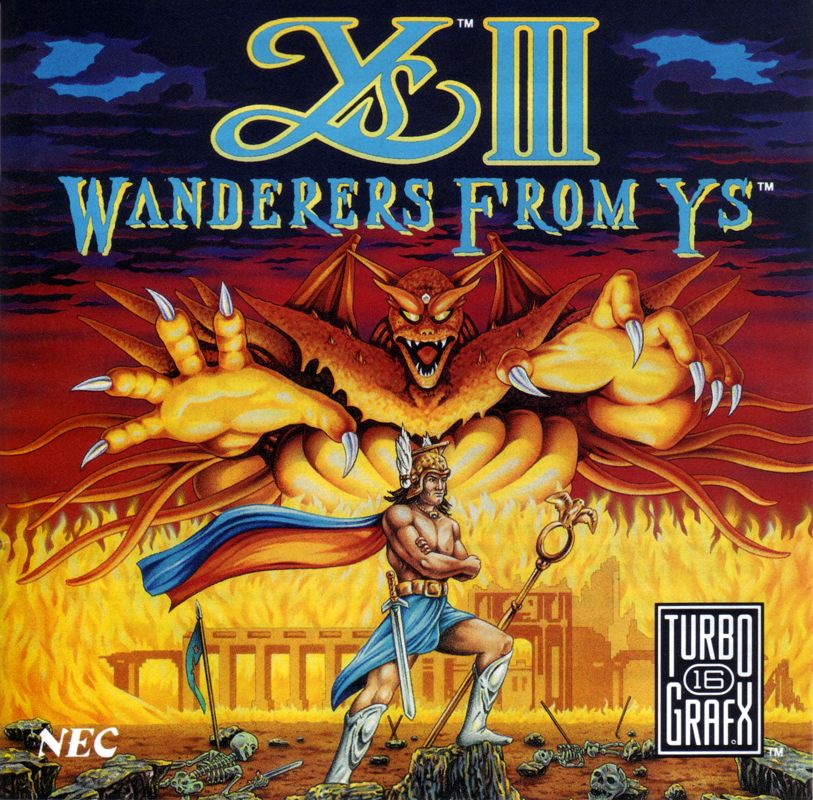
It’s fun to get away from the Jaguar every now and then and talk about a system even more obscure. The TurboGrafx CD had an even smaller US library and like other CD add-ons at the time was prohibitively expensive. $400 is a lot of money now let alone 33 years ago. Despite its obscurity, however, I am a fan of the TurboGrafx CD. They avoided the more gimmicky nature of other CD-ROM consoles of the time and actually churned out some good games. Ironically, the higher quality may be one of the reasons the Turbografx CD is less remembered than Sega CD or Jaguar. There just aren’t as many funny and weird games. There are also several games that have much more well-known releases on other consoles. If you’ve ever played Ys III: Wanderers from Ys, there’s probably a 99% chance that you played it on Super Nintendo. It was also the only game in the Ys series that most American gamers had played up until the 21st century. Unless you had a Master System and played the mediocre port of Ys: The Vanished Omens then Ys III stood more as an odd standalone release than part of a series. America wouldn’t have another Ys game until Ys VI: The Ark of Napishtim in 2005. Fourteen years is a long time between releases, and it’s not the only RPG series on TurboGrafx CD that had a long gap between US releases. It wasn’t easy being an RPG fan in the 90s.


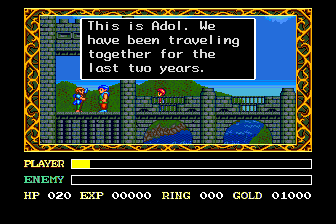
(If you've never played Ys before, Adol is the one that saves the world while Dogi is the one that introduces him in a new town and then hangs out in the inn the entire game)


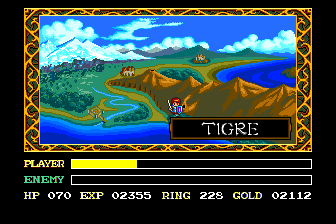
It’s funny that Ys III is the only early game in the series known to most Americans, because it doesn’t play like any other Ys game. Where most of them are more traditional action RPGs with top-down and later 3D worlds, Ys III is completely side-scrolling. Where other entries in the series have you attack by bashing into enemies, Ys III actually has you swinging a sword. The RPG elements are even lighter, but it does have enough leveling and money gaining to still qualify. The game features a single town and several dungeons that are accessed by an overworld map. The use of a sword certainly helps, and the combat is probably the game’s best feature. Series protagonist Adol really swings that thing fast, and there are enough different enemies for the dungeons to always be entertaining. The game had a good rhythm as well. I felt a very natural progression as I made my way through, and never felt like I had to gain too many levels to proceed. However, much like with The Vanished Omens about halfway through the game I was maxed out in both levels and no longer had anything to buy in town. It mattered less in Ys III, however, for reasons I will get into later.


Of course, if you are buying a CD-ROM version of a game that also has a cartridge release you want it to be bigger and better. Ys III certainly throws in the bells and whistles. It has some great anime-styled cutscenes and improved music, but most impressively it has a lot of voice acting. It’s seriously hard to think of another game of the era that has so much spoken dialogue outside of FMV games. The quality of the acting is decent for the time, although there are some awkward pauses. I also think it’s odd that Adol isn’t voiced despite being the main character. His dialogue is all text, and even in the closing scene he keeps his mouth shut. It’s an odd choice that I don’t quite understand. I guess they could be aiming for the classic silent protagonist, but he does have plenty of text-only dialogue. Still, it has enough voice acting to make your less wealthy friends jealous. It certainly takes advantage of the new format.


However, there is a serious flaw with Ys III. This game is short. It’s in the running for shortest RPG I have ever played. We’re talking less than three hours, even if you don’t know what you’re doing. Sure, a couple of bosses might hang you up, but even with these roadblocks it is ridiculously brief. The Super Nintendo version takes longer which might be due to the slower speed, so it’s a bit jarring finishing the game so quickly. That’s why I mentioned that maxing out the stats doesn’t matter. By then there’s only an hour or so left in the game. It’s a shame because I could’ve spent several more hours playing Ys III. Actually, all of the first three Ys games are very short. The first two games are combined in another Turbografx CD disc, and the whole thing only takes about ten hours. More recent games in the series are sprawling RPGs full of bonus content that can take over 50 hours. It’s interesting how much things have changed in the last thirty years.


Even with its short length I am going to put Ys III: Wanderers from Ys into the good column. I certainly had fun playing it, and that’s what counts the most I suppose. I was obsessed with action RPGs as a kid, and this game certainly has that old school charm that takes me back to my youth. And let’s face it, if you’re playing this game in 2023 you are probably doing so without paying $600 for the console and $200 for the game. So, if you do have some way to play Ys III or have very deep pockets and want to track down a physical copy, I recommend it. I spend $500 on a TurboDuo back before I had kids, so I won't judge. It’s a quick and fun way to complete 2.33% of the entire US library, and I can’t say that about many games. It actually ended up much higher on the list than I expected. The lower part of the good section probably has some games that don’t belong, but you can blame that on my sunny, optimistic disposition. Everyone knows I’m Mr. Positive. It’s all the way up at #44 just under Tecmo Bowl and above After Burner. It’s a good way to introduce an underrated console.


TurboGrafx CD Quality Percentage: 1/1

Ranking List.docx

Monday, October 30, 2023

NES #36: Mike Tyson's Punch-Out!!

Developer: Nintendo

Publisher: Nintendo

Release Date: 10-18-87


When playing Fight for Life I was disappointed by the game’s conspicuous lack of ropes. So, I decided to make up for it this time around and play one of my favorite games that prominently features ropes. Okay so ropes don’t make or break the game, but they do help illustrate how much a game can be improved with a strong sense of self. Nintendo decided to license Mike Tyson’s likeness for their American release of Punch-Out!!, but Tyson stands out as an odd beacon of reality inside a zany cartoon. And Mike Tyson’s Punch-Out!! never lets you forget that it is a zany cartoon even when it supposedly takes place in the real world. The characters are exaggerated, oddly colored giants with unique characteristics and personalities. Some of them have aged better than others, but they all help to make the game memorable. There were many boxing games released in the 80s, but this is probably the only one most people have heard of. That might not be the case if Little Mac fought generic muscle men in black shorts. Mike Tyson is still quite famous so that might help, but it’s just as well known in the later versions that have him taken out. What makes Mike Tyson’s Punch-Out!! special is the way it turns the whole concept of boxing on its head.


(I always felt like a Glass Joe in a world of Super Macho Men)


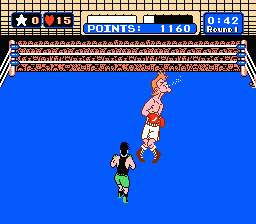
Mike Tyson’s Punch-Out!! is a master class in waiting. Most boxing games are all about aggression. You can get by in many of them just by punching a whole lot and ignoring what your opponent is doing. In Mike Tyson’s Punch-Out!! you have to wait for the right moment to strike. Typically, your opponents will attack first, and your strategy is all about reaction. You wait for them to twitch their eyes and do an uppercut so you can get in three or four punches and then wait for their next tell. Random punches will be blocked just about every time, and every missed punch will deplete your hearts until you are a worthless purple blob unable to fight back. So, you really have to know your opponent. This kind of personality was a revelation after years of sports games featuring stick men and nameless bald white guys. I’ve heard Punch-Out!! referred to as the original rhythm game because of its punch and wait gameplay with predictable moves from the opponents. Of course, famous firsts are rarely the actual first, and there are some earlier sports titles that employed similar mechanics. There were probably even earlier ones that have ropes. Punch-Out!! made it all memorable and fun however, and that’s the most important thing.


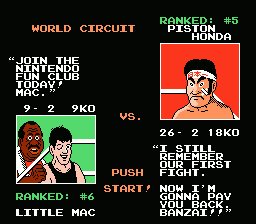
I originally played through this game maybe twenty-five years ago, so it’s surprising how well I still remember it. I felt like I could play through parts of it with my eyes closed. I even still remembered the password for the world circuit. I was hopeless against Mr. Sandman back in the day, so I entered that password dozens of times. You know it’s a good game when you can pick it back up after years away and still remember how to play. It’s not perfect of course. Three of the fighters are recycled in the world circuit, and while I enjoy the second Bald Bull fight, the other two don’t add much. The second Don Flamenco fight can even get downright annoying. It’s also rather short and can get repetitive. These are minor complaints, however. I always have fun going back to this game.


 Mike Tyson’s Punch-Out!! is a standout of gaming’s big comeback year. It’s hard to find a more important year for gaming in America than 1987. It would see many of the ultimate franchises that have shaped gaming forever. That’s when we got The Legend of Zelda, Castlevania, Mega Man, Metroid, and many of the other most iconic NES games. Mike Tyson’s Punch-Out!! is one of the games that shaped 1987, and it’s hard to think of the NES without it. I still like Ninja Gaiden a little better, but I’m putting it above the excellent but less playable SMS Sonic the Hedgehog to give up a new #10. That gives us 20 good NES games so far which means I’m well on my way to proving to the world that there are more than 100 good NES games. It’s a responsibility I take very seriously, and I hope I am remembered for it in the future. What’s more important than Nintendo?


NES Quality Percentage: 20/36 or 55.55%  


Ranking List.docx

Friday, October 27, 2023

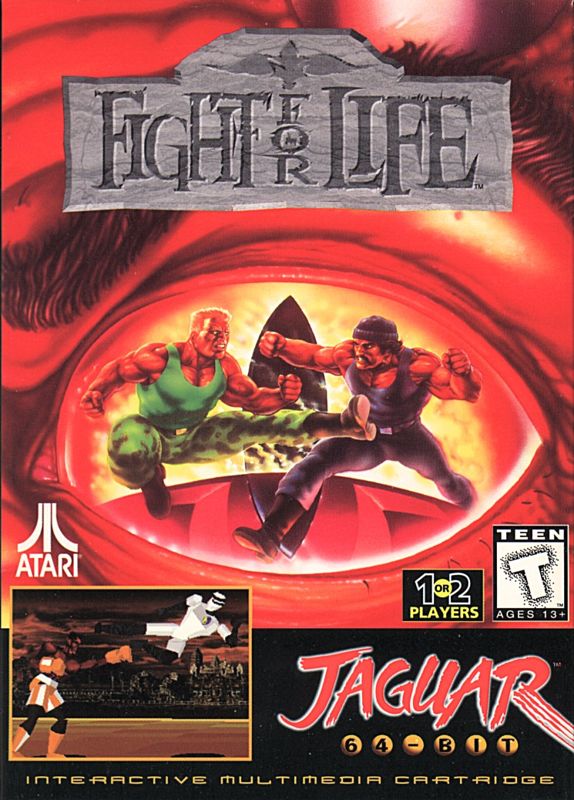
Atari Jaguar #6: Fight for Life

Developer: Atari

Publisher: Atari

Release Date: 4-19-1996


The other day I was thinking about bands who ended their careers on a low note. I’m thinking of bands like Creedence Clearwater Revival whose final album, Mardi Gras, saw John Fogerty barely participating and instead featured Doug Clifford’s bland country rock and Stu Cook’s angry gargle of a voice. Or how about The Clash’s infamous Cut the Crap which saw Joe Strummer trying and failing to get back to basics awash in a sea of keyboards, drum machines, and anonymous back-up singers. These albums are so bad that they’re practically disowned by fans and creators. Most people will tell you that the final Velvet Underground album is the classic Loaded when it is technically the album Squeeze. Hey, want to hear a Velvet Underground album that only features their second bassist? Neither did anyone else. Even the Beatles couldn’t get it quite right. For their final statement they created the masterpiece Abbey Road with one of the all-time perfect second sides. It would be the perfect last album if not for the fact that they released the difficult-to-make, band destroying Let it Be eight months later. Still most people consider Abbey Road their final album no matter what the truth actually is. My point is that bands don’t usually break up when all is well. They more commonly end when everything is falling apart. Atari was in a similar situation in 1996. Unable to compete in a world with PlayStation and Nintendo 64 they were out of options and finally had to close up shop for good. However, they still needed to recoup whatever money they could get. That brings us to Fight for Life. Although the Atari name would live on and Jaguar would still be supported by Telegames for a while, Fight for Life ended up being the final game released by the original Atari Corporation. One would hope that Atari would go out with dignity or at least something passably fun. Sadly, this was not to be the case. Fight for Life is the perfect example of a company limping to the finish line. But it’s a 3D fighter, right? Doesn’t that count for something?


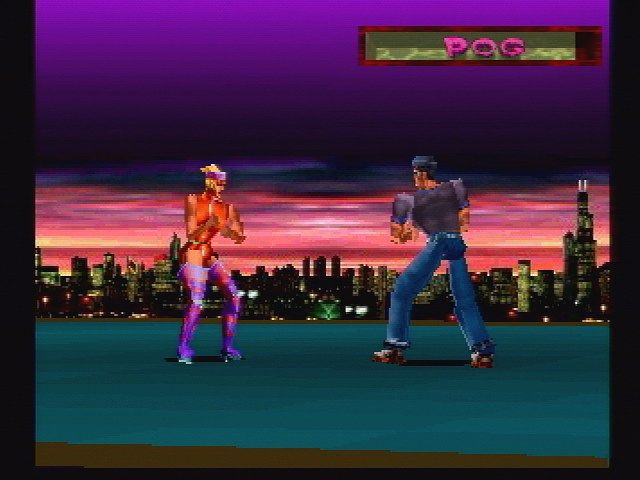
(Yes, it is funny that this game is from 1996 and the character's name is Pog)


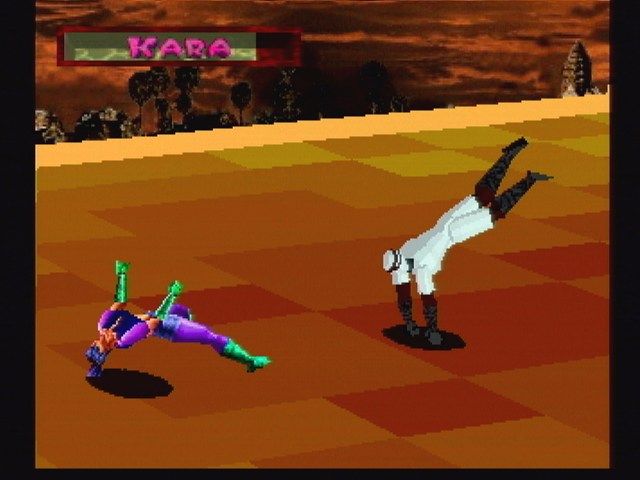
Strangely, the fact that it was a 3D fighter somehow got it some decent reviews back in 1996. It makes me wonder if their reviews stopped at the box art. How could anyone play this game and not see it as a total disaster? I like to be thorough in these reviews and play the games for a significant period of time. When Playing Fight for Life I kept looking at the clock and wondering how long was long enough. It is one of the most boring games I have ever played. It should’ve come with a Fight for Life branded blanket and sleeping cap because playing it instantly makes me tired. It’s the slowest a fighting game could possibly be without the two characters being completely stationary. I’m not sure if it’s even possible to make a game go slower. You really gotta be ready to inch along and spam some moves at the outset. You are able to steal the moves of defeated opponents, but in the beginning you are basically just slowly kicking and punching. Normal attacks do very little damage, so you’re going to be there for a while. If you’re lucky you can land some jump kicks, but the move is tricky to pull off. There’s no clock, so rounds can last several minutes. It’s just as well because if the clock lasted a typical 60-90 seconds than every match would end in a damage-free draw. This is probably a bit of an exaggeration, but it doesn’t feel that way when I’m playing. It feels like every round lasted ten minutes with victory only achieved because the other fighter died of old age. But no, I really did play this game, and I really did fight my opponent until they were knocked over, and it didn’t take so long that I had a ZZ Top beard by the end of it. The rounds were probably more like 2-3 minutes each, but when they’re so slow and boring they feel like an eternity.


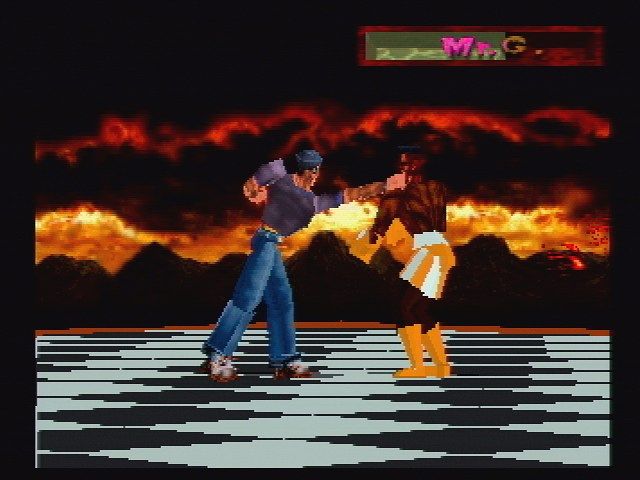
 The finished product definitely reflects the troubled history behind Fight for Life. The development cycle was almost as long as the Jaguar’s lifespan, and employee turnover was high. There was plenty of meddling on Atari’s end and unrealistic goals on the developer’s side. I highly doubt it was actually finished when it was finally turned in, but Atari didn’t have any more time to wait. None of the Jaguar’s strengths are on display in Fight for Life despite it being one of the last games for the console. The character designs are boring and chunky while the graphics are spare and generic. It’s just a big, empty square with maybe some hazy buildings far off in the distance. If you wander too close to the edge of the square you will get electrocuted, but this electric barrier is merely implied. They couldn’t put in a rope or fence to indicate a border? That would at least be something to look at. Image a game so bad that I wished I was looking at a rope. That’s Fight for Life. Even most of the stinkers on Jaguar had good graphics. Atari Karts might’ve been a bit dull, but the backgrounds were almost distractingly good. Even Club Drive was more detailed, and the graphics in that game were almost completely comprised of blocks of cheddar cheese. Fight for Life truly is a failure on every level. The best thing to do with Fight for Life is to play it with your friends for a half hour and then spend the next ten years talking about how bad it is. At least in that case you can take comfort in the fact that you have friends.

(Just imagine a rope back there. That would certainly improve things)

 Like so much that Atari tried to do past gaming’s second generation, Fight for Life is a disaster. It’s long been a game that has gotten merciless reviews, and for once I have to agree with snarky internet commentators. In fact I think I became one just for this review. Hopefully I can snap out of it, but Fight for Life changes a person. In fact I think I’ll take the Velvet Underground route and just pretend like it doesn’t exist at all. What was the game they released right before it? Oh, Attack of the Mutant Penguins. Well maybe I’ll go even further back. Hey, Ruiner Pinball was pretty good. That’s now the game that will live in my brain as the final original Atari release. At least it will be until I have to review all the other games. Life isn’t easy for an obsolete technology reviewer. So it’s no surprise that Fight for Life is going low on the list. It’s the bottom Jaguar game, and it may stay that way for a long time. It’s #135 out of #145 overall which honestly a little higher than I expected. All things considered it’s still a better fighting game that Rock ‘Em Sock ‘Em robots. I swear that someday I will review a good fighting game, but until then bring on the dregs. I can handle it.


Jaguar Quality Percentage: 1/6 or 16.67%


Ranking List.docx

Wednesday, October 18, 2023

Atari Jaguar #5: Ruiner Pinball

Developer: High Voltage Software

Publisher: Atari

Release Date: 11-6-95


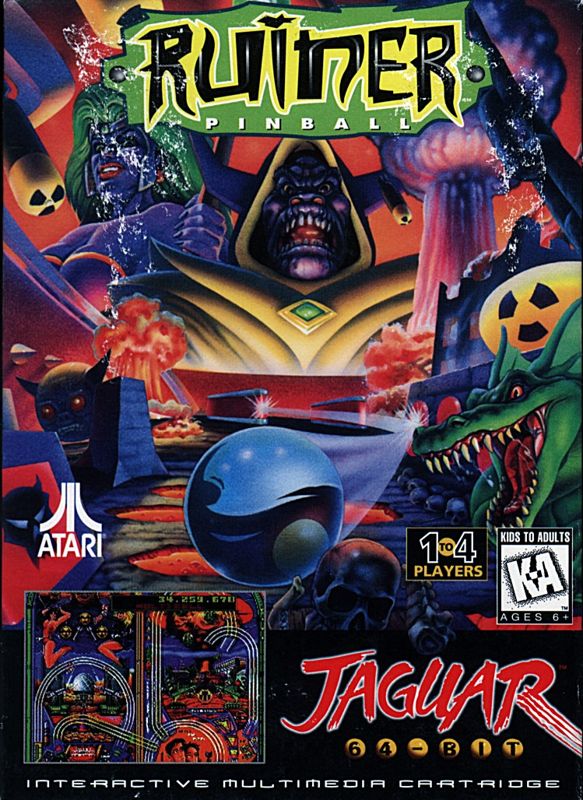
One fun thing about the Jaguar is that the library of games is very small and new enough to be well documented. It’s a little tricky doing a chronological run of Odyssey 2, but with Jaguar it’s easy to know which game was released when. Ruiner Pinball was the 34th Jaguar game released, just ahead of Atari Karts. That puts it close to the end of Jaguar’s relevance being released just a few months before Atari’s demise. Six games would officially be released after Atari bowed out, but when you talk about games like Ruiner Pinball you are really starting to look at the end of the original Atari company. By this time things were getting desperate, and people were really hoping some game would come along and change the narrative. That might explain the bad reviews Ruiner Pinball got upon release. They were looking for something bigger and flashier than a humble pinball game with modest graphics and not much to do outside of getting a high score. More recent reviews have been much more positive. Long after the dust has settled, we can look at the library as a whole and appreciate each game without trying to help consumers decide which console to buy for Christmas in 1995. Wait, 1995? That’s when PlayStation came out. It had more games in the first three months than Jaguar had in the first three years. Jaguar really was doomed from the start, wasn’t it?


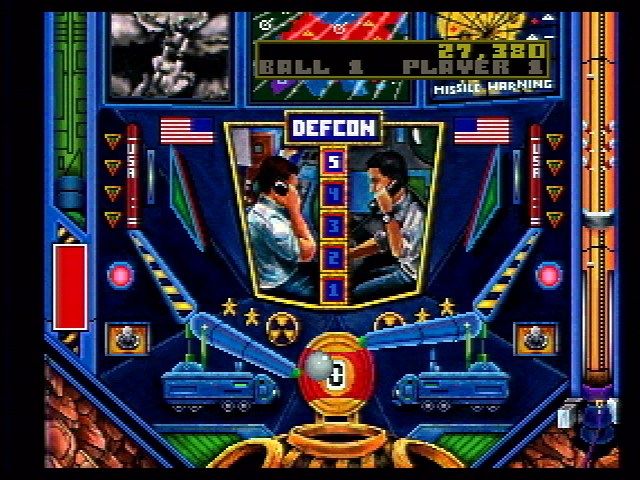
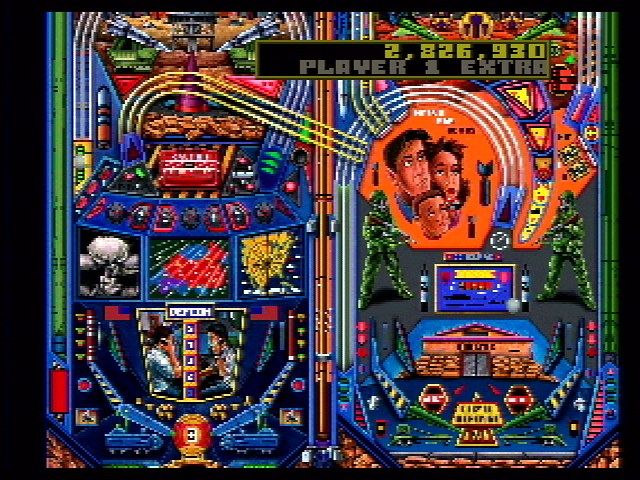
 Of course, I am a modern reviewer who doesn’t have to worry about which mid-90s console people should buy, and I can definitely say that Ruiner Pinball is a pleasant underdog. It might fade a bit behind some other prominent 1995 releases, but it’s a quality pinball game with good replay value. The two tables are interesting and appear to be aimed more at adults. The name Ruiner even comes from a Nine Inch Nails song. Ruiner will also likely appeal to Stanley Kubrick fans as it’s a cold war satire in the vein of Dr. Strangelove. Who knew pinball tables could be satirical? It has a mid-century look complete with pin-up girls and mushroom clouds, and there are frequent barrages of bombs and missiles. A few of these stunts couldn’t be done on a real pinball table, but mostly it does a good job simulating the real thing. There’s not an overabundance of video game gimmicks. The physics are a little bit off, but not so much to ruin the experience. I just wish it was a little slower. It moves faster than an actual pinball machine, and this causes the ball to get lost occasionally.


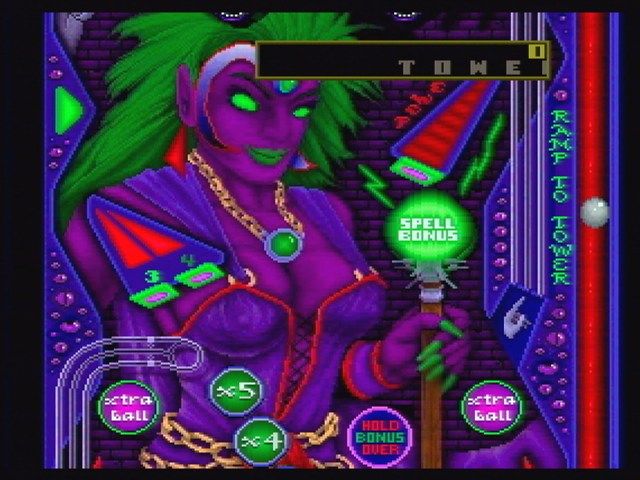
The second table is called Tower, and for such a generic title it’s a weird machine. In fact, it straight up takes place in Hell. That’s a bit much for a pinball table! They were likely inspired by Devil’s Crush on the Turbografx-16, but Tower goes even further. It’s a multi-leveled table that is full of devilish horrors. It features a buxom demon woman and a poor soul trapped on a torture device among other vivid images. It’s not the most high-definition game on the system, but I like the interesting color palate full of purple and green. Tower is strange looking and very large, but it plays even more like the real thing than Ruiner. It’s focused on familiar pinball goals such as drop targets and rollovers. If you enjoy lighting things up and knocking things over than Tower is a good machine for you. Despite its disturbing appearance it is oddly comforting. My son certainly enjoyed it, and you don’t have to worry about it warping his brain because this game got a K-A rating. This was the early version of the E rating, which means that Ruiner Pinball is appropriate for everyone. I imagine it would get at least an E10+ today because I could see it being a little bit too mature for the younger crowd. It’s like the movie world before PG-13 existed. Sometimes a movie that was a little too violent for little kids would slip through.  


 So Ruiner Pinball is a low-key game that probably won’t end up on too many “best of” lists, but It’s a fun game for pinball fans. Since I am a pinball fan and the ranker of games that means that we finally have our first good Jaguar game. It’s also the even rarer, good Jaguar game that’s only on Jaguar. Many of the better Jaguar games are familiar titles that were ported to several other systems. NBA Jam TE is a good game, but it’s on about a dozen more popular consoles. My memories are a bit hazy so it will be interesting to see how many good Jaguar games are exclusive to the system. Of course, if you want to play Ruiner Pinball now you can do so on Atari 50. I am ranking it at #68 of 72 good games. That’s not super high, but you have to start somewhere. Here’s to the weird and interesting world of Atari Jaguar. There are plenty of famously bad games, but there are a few hidden gems that you’ve never heard of.


Atari Jaguar Quality Percentage: 1/5 or 20%


Ranking List.docx