Thursday, August 4, 2022

NES #26: Bible Buffet

Developer: Wisdom Tree

Publisher: Wisdom Tree

Release Date: 1993


Have you ever used the phrase "cooler than a hot dog wearing sunglasses?" Because I am going to try to make that a thing


Wacky isn’t a word that comes up much when talking about religious games, but dang this game is wacky. I’m not religious, so I have no idea what a typical Christian would think about a game like this. It’s a game that’s 1% bible and 99% buffet that celebrates good ol’ gluttony. Christians like gluttony, right? Do they like blowing up walking french fries? I know that’s a silly question. Everybody enjoys blowing up walking french fries. Okay so the circumstances behind this game shed a bit of light on why such a weird game ended up with a religious theme. Wisdom Tree started out as the infamous Color Dreams, a company that got around Nintendo’s lockout chip and produced about a dozen mostly awful unlicensed games. Nintendo forced Color Dreams out of regular stores by threatening to remove their own games if retailers carried Color Dreams games. In order to stay in business, the secular Color Dreams became the religious-based Wisdom tree so they could sell their games at Christian retailers where Nintendo didn’t have a presence. Because of this many of their games only have an insular connection to religion. You can tell that some of them were designed before the switch and were only converted to a religious theme at the last minute. Nowhere is that more apparent than Bible Buffet, a game that’s both fever dream and Bible lesson.


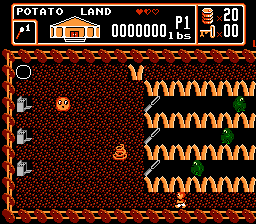
 Bible Buffet plays just like a warped version of Candy Land. Thank of it like that game except every space you land on involves a battle with dangerous walking candy and you’ll get the idea. You spin the wheel and move that number of spaces just like in a traditional board game. Each section of the board is named after a specific type of food. They get the healthy foods out of the way early leaving room for all the junk food in the world. Right after Salad Land comes Fast Food Land and it all culminates with Dessert Land. Also, your points are pounds in this game, so the more empty calories you eat the better. On most spaces you are sent to an action stage, and this is where things get weird. The gameplay isn’t that odd. It’s sort of a Bomberman-meets-Crystal Mines setup which is fun enough. It’s the imagery that makes everything strange. Almost everything is food. The walls are mashed potatoes! The enemies are walking tomatoes! You eat corn dogs and kill evil cups of coffee! Got a food you really don’t like? Well, there’s a good chance you’ll be able to blast it to smithereens in this game. If, like most people, you have fantasized about destroying walking broccoli while also eating 100 pickles in a row than this is the game for you.  


 So where does the Bible play into all of this? Every once in a while, you will land on a red space that will send you to a Bible pop quiz. Strangely, where other Wisdom Tree games had the questions displayed on the screen, Bible Buffet only displays the true/false and a/b choices without written answers. The questions were all in the book that came with a game. This means that if you are playing this game today, you’re probably just guessing, and since it’s a 50/50 choice you’re probably getting many of them right. There’s not really any penalty for getting them wrong either, just less points. So, this is a rare religious game that can be enjoyed by non-Christians without anyone being offended. It’s both a kooky food-based board game and, if you have the questions, a Bible quiz game. So, I guess everybody wins?


 So, I’m just going to say it. Bible Buffet is fun. It’s a wacky game that I have played through more than once and enjoyed every time. Some people will automatically say that because it is unlicensed and religious that it is automatically bad. Most of the reviews are decidedly negative. However, I can’t deny the fun I had playing it, and that’s still the most important metric. Of course, the game is not flawless. It’s fairly shallow and easy. If you’re playing by yourself, it will only take about twenty minutes to play through. Also, even though up to four players can play at once, the gameplay seems much more suited for a one-player experience. It just doesn’t work that great as a board game, and it’s obviously a clone of Candy Land. Still, it’s going to end up in the good column. In fact, it’s going right at the bottom of the good column at #60. Still, that’s pretty good for such an overlooked game. I am sure I am the only person on the universe who would rank Bible Buffet ahead of Demon’s Crest, but I stand by that decision. At least Bible Buffet doesn’t send you around in circles playing the same three levels over and over again. It’s definitely a game with a very clear start and end point. They’re even labeled for your convenience.


NES Quality Percentage: 14/26 or 53.85%


(images are from mobygames.com)

Thursday, June 23, 2022

Nintendo 64 #2: Tigger's Honey Hunt

Developer: Doki Denki

Publisher: Buena Vista Games

Release Date: 11-01-2000


Twice in a row I have tried to make a comeback on this blog only to be thwarted by my own incompetence. I wrote two very good partial articles for two different games that I was very happy with. However, I always forget to save these things, so they were both tragically erased. Both instances were quite discouraging, so I took a while to get back around to writing again. Thankfully I have recovered enough to feel like dusting off the old laptop and getting back to work. I picked a quickie though so if it does get erased, I won’t have trouble writing about it again. Hey, it’s #2 in Noah’s insignificant N64 game challenge. Thankfully this one is much better than the Jeremy McGrath game I played.


 Actually, Tigger’s Honey Hunt is a bit of a hidden gem. That might be overstating things slightly, but there’s just something satisfying about a well-designed 2D platformer, even one obviously made for kids. It’s even more surprising considering Disney went with an almost unknown developer to make it. Disney has a very long and interesting history in the video game market stretching all the way back to the Atari 2600 days. They have worked with some of the biggest developers around, but they have just as many games made by less famous companies. Doki Denki only made five console games and all but their Smurfs game were based on Disney properties. It was a fairly prolific arrangement for a year or so, but none of their games really became big hits and they went out of business in 2003. The Disney machine kept chugging away of course and their video games will probably never cease. Has anyone done a series where they played all the Disney games? That would be a good project.


So as I previously stated, Tigger’s Honey Hunt is a 2D platformer almost completely based on collecting items. There are plenty of enemies to be found, but losing lives only sends you back to the last checkpoint so they don’t pose much of a challenge in themselves. The main challenge in the game comes from finding honey pots. Pooh wants to have enough honey for his party, so Tigger goes out to collect like 700 of them. Each level has a certain limit you have to meet with 100 total scattered throughout. You do get extra percentage points if you collect all 100 and find a missing item in each level, but I can’t tell you what happens at 100%. I finished with about 60% complete and the party at the end seemed fun enough. Since this is a Disney game they probably throw in some fireworks or balloons. The loved doing that.


I was very impressed by the level design in this game. There were plenty of hidden rooms and hard-to-reach ledges with even more honey pots. In fact, the only items in the game were honey pots, Roo pictures that I still don’t know the purpose of, and a special item to find for a specific character. It’s strange to play a platform game without the usual extra lives and energy restorers. It’s all very streamlined which works well in context. This is a Disney game made for kids after all. Still, finding all the needed honey pots provides a decent challenge without ever getting too frustrating.


Tigger’s Honey Hunt isn’t a great game by any stretch of the imagination, but I enjoyed the hour or so I spent with it. The short length is probably the biggest knock against it. Two hours might be a bit more justifiable on Playstation, but Nintendo 64 games tended to be more expensive. Even today the N64 version is worth almost twice as much as the Playstation version although we’re talking 15 dollars versus 40 or 50. Still, it’s a quality kids game for Nintendo 64 and it’s good enough to make it into my green section at #55. Not bad for a licensed game that nobody’s ever heard of.


Nintendo 64 Quality Percentage 1/2 or 50%


Nintendo 64 Rankings


1. Tigger’s Honey Hunt

2. Jeremy McGrath’s Supercross 2000


(Images are from mobygames.com)


Thursday, April 14, 2022

Nintendo Switch #7: Rune Factory 4 Special

Developed by: HAKAMA/Neverland

Published by: Marvelous Inc.

Release Date: July 25, 2019


I have been a little unfair to Switch on my blog so far. Despite it being one of my favorite consoles ever I have mostly limited my reviews to bad digital shovelware titles that no one but me will ever play. So it’s nice to finally have a real game to review again, and not just any game but Rune Factory 4, everyone’s favorite Japanese farming sim/RPG series. It is everyone’s favorite, right? In case you’ve never played any of the Rune Factory games the name is a little misleading. Going in the first time I thought it was going to take place in a literal factory where runes were made. I thought the main focus would be collecting materials and using runes to augment weapons. That actually sounds fun, but the titular factory is metaphorical. Of course since this is already everyone’s favorite farming sim/RPG series you probably already knew this. I’m always a little late to the party.


 The Rune Factory series is an interesting beast. It was originally designed as a more action-based spinoff of Harvest Moon. You farm and make friends in town of course, but there is also an RPG plot featuring monsters and dungeons. I’ve played the first one, and should probably review it first, but its a little too rough around the edges for me to make much progress. I’ll review it if I can ever actually finish it. Luckily most of my annoyances in the series have been fixed by the fourth installment. The goals are much clearer, it’s much easier to get started, and all the items needed for crafting are easy to obtain.


What’s fun about this game is that practically everything you do gains you levels and raises your stats. It’s hard to think of an action in this game that does not improve your character somehow. Walking, sleeping, and bathing increase stats along with every different type of attack and magic type. There is no wasted time in this game. Even if you are just wandering around town talking to people you are leveling up skills. If a certain dungeon area is too difficult than it’s time to get back to work raising those skills, and with so many different skills to chose from it never feels tedious or grindy. You can spend the day gardening, or crafting, or running your store, or fighting monsters with lower level weapons. There is a rhythm and routine to it all, but there is a lot of variety too. Every day I would wake up to check on my crops and ship anything that had grown. The game even starts with a long rainy season which keeps watering plants at a minimum until you can get a better watering can and monster friends to help you out. It’s a game full of pleasant routines and endless possibilities.


 My only gripe is that I wish the story portion of the game lasted a bit longer. The overworld is surprisingly small and there are only a handful of dungeons. I was able to get the credits to roll in the middle of my first fall. Of course the story can be traversed at your own pace, but I thought I was taking my time. There is still plenty to do of course, and you can keep right on playing, but it does lose something with the plot finished. At least it does for me. I am no longer leveling up to fight my way through the next dungeon or saving up money to get better equipment. I may be greedy, but in a game with everything I was expecting even more.


I’m not going to quibble too much though. Rune Factory 4 Special is a great game, and since I have a 12,000 game backlog I should probably be glad that it didn’t take me 100 hours to complete. Hopefully I can review a few more prominent Switch games and swing the percentage back in the right direction. Rune Factory 4 Special is going all the way up to #15 right under the similar but even more interesting Viva Pinata. I gotta say, I might have to redo my list somewhat. I think 1-10 is fine, but 11-20 is a bit messed up. Is Wrecking Crew really better than Pac-Man? It’s something I have to ponder in the future. Anyway I reiterate, it’s a great game that deserves to be high up on the list.


Switch Quality Percentage: 3/7 or 42.85%


(images are from mobygames.com)


Monday, March 28, 2022

Colecovision #2: Pepper II

Developer: Exidy

Publisher: Exidy

Release Date: 1982


 I love the story behind this game’s strange name. It was originally supposed to be called Zipper. This name makes sense as the game is full of zippers. However, they discovered the name was already taken so they had to hastily change it. They changed it to Pepper and for unknown reasons added a II at the end despite it not being a sequel to anything. I guess they were worried that Pepper was too generic and that the Roman numerals would help it stand out. I suppose it worked because for years before I played it I knew there was a game out there called Pepper II and always wanted to check it out. I don’t know if I would’ve felt the same way if it was just called Pepper or even Zipper. I’m glad I finally played it too because it is yet another lost Colecovision classic.


Pepper II is maybe the best game on Colecovision that was never on another console. It’s a fast-paced and clever game that even works great with the Colecovision controller. It is a bit derivative though. It’s a maze game so of course there are touches of Pac-Man in it. It’s also a game about filling in squares so it’s a bit like Amidar. Unlike Amidar, however, Pepper II is fast and not nearly as geometric. The object of the game, just like its original name, is to zip up open zippers in a maze by moving over them. If you move backwards on one, it will unzip so you have to be careful. It was never much of an issue for me, but I was playing it on easy mode. You complete a section by filling up all four sides which makes the empty sections fill in. You are pursued by disembodied eyes and can defeat them by closing a section around a pitchfork. Hey what do you expect from a game called Pepper II? With a name that strange anything goes.


My favorite part of the game is that every level is split up into four maps. Getting tired of filling in the same old map? Just follow the path off the screen and you’ll find a different one. It sure blows Pac-Man out of the water with it’s one map ever. Maybe there is some sort of psychological element to it, but it really does make the game feel bigger and faster. I can’t believe how fast I can go while still being able to turn when I want to. Unlike Pac-Man I didn’t often get trapped in a corner. There always seems to be a way out of trouble, and there are plenty of pitchforks. It’s the perfect speedy maze game.


I always have a blast playing Pepper II, and it really is a great showcase for the Colecovision’s arcade capabilities. I really do get that exhilarating feeling that I get at a great arcade cabinet, and sure the visuals are simple, but they still look nice for what they are. It’s also managed to stay relatively cheap so if you have a Colecovision getting this game is a no-brainer. Pepper II finds itself all the way up at #20 on the list. It’s not quite as unique as Clu Clu Land, so it sneaks in just under that one. It’s been nice playing so many good games lately. I can only assume that every Colecovision game is good. I mean, I’ve like both of the ones I have played. I guess it’s time to go prove myself wrong.


Colecovision Quality Percentage: 2/2


1. Pepper II

2. Cabbage Patch Kids: Adventures in the Park


(Images are from mobygames.ccom)


Saturday, March 26, 2022

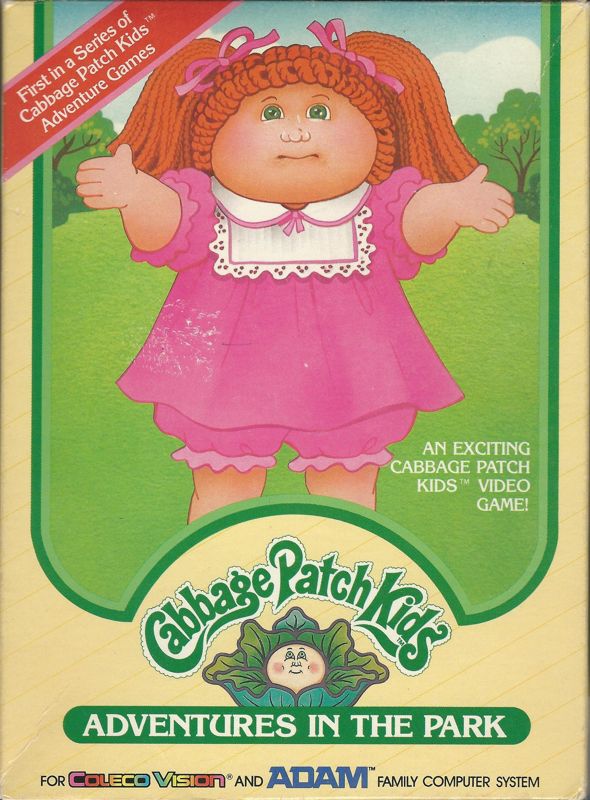
Colecovision #1: Cabbage Patch Kids: Adventures in the Park

Developer: Konami

Publisher: Konami

Release Date: 1984

Sadly, it was also the last Cabbage Patch Kids Adventure game. Also, it's one of the first games with a female protagonist if dolls count.

 It feels like an act of desperation for Coleco to release a game based on their most popular property in 1984. In the darkest year for gaming in the US they tried to lob a Hail Mary and save the industry with a game based on the latest craze. Sadly, it didn’t do much for Coleco’s fortunes, and their console didn’t have much time left. This could be the story of a quick cash-in similar to E.T. for Atari. However, Adventures in the Park is a much better game than it has any right to be. I’m sure it helps that it was made by Konami who at the time was one of the best arcade developers around with classics like Frogger and Pooyan to their name. Stumbling onto a lost classic is always exciting, so when I played this game, I couldn’t wait to write about it.

I love those backgrounds

 I first played this game on my MSX emulator, but I think I might like the even smoother Colecovision version better. Adventures in the Park plays like a more complex Pitfall, and not only because you swing on vines. It’s an early side-scrolling platformer with a massive 100 different numbered screens. Some of them repeat, and a few early ones are just walking from one side to another, but it’s still an impressive amount of game for 1984. It uses just about every gaming mechanic available at the time outside of shooting aliens. You jump over obstacles, hop from platform to platform, ride on lily pads, and avoid giant bees among other things. It’s impressive how much skill it takes to master what should be a simple Cabbage Patch Kids game.


It's why they're called platform games

I also love that each screen is individually numbered. The counter and game start over after number 99 so it doesn’t truly have an ending, but the numbering gives each screen a unique feel. Sometimes I would get stuck on a particular screen, like that tricky jumping ball obstacle on screen 24, so the numbering gives a real feel of accomplishment. It’s a game based much more on progression than score which anticipates what games would become in the mid-80s. Of course, it’s also fun trying to get a high score as well. You get a massive bonus for completing each 10-level stage, so speed it key. I played this game over and over again just to try to raise my score by a couple hundred points, and every time I played I seemed to get a little better. It’s a game with a very high ceiling.

How could I ever forget scene 12?

 I know I sound like I’m gushing about, but I live for pleasant gaming surprises like this one. I don’t have much experience with Colecovision outside of the Flashback plug-and-play, but this is easily one of my favorite games on the console. It’s a shame that licensing issues keep this one off of compilations. Hopefully the console is full of pleasant surprises like this one. It’s a game that looks and plays great and makes me a little sad that the Colecovision had such a short life. Can you believe I am putting a Cabbage Patch Kids game in the top 25? Because that’s totally what I am doing. It’s my new #23 right below Alex Kid in Shinobi World. Not bad for a cash-in game designed for kids. If only every licensed game was made with this much care.


Colecovision Quality Percentage: 1/1


images are from mobygames.com


Wednesday, March 16, 2022

Vectrex #2: Spike

Developer: GCE

Publisher: GCE

Release Date: 10-1983


No add-on needed!


Spike has such a good presentation that I really wanted to like it. I played it once and was ready to put it in the green column. It has a big cartoon mascot, synthesized voice, and neat pseudo-3d visuals. Unfortunately, first impressions are sometimes incorrect, and this game illustrates why I really need to play the games for a while before I can judge them.


Spike is a very early platform game that is pretty much nothing but platforms. You play as the titular Spike trying to save his girlfriend Molly from a bad guy named Spud. Yep, this is a Donkey Kong clone. The gameplay is much simpler than Donkey Kong though. The main objective is to move across scrolling platforms while collecting Molly’s bows and then exiting the door at the top. At least they’re bows according to Wikipedia. I could’ve sworn they were keys. It’s a bit hard to tell what is what in this game, which is a flaw I will admit. Eventually monsters show up and the platforms start to move faster, but the basic gameplay never changes.


Since this is Vectrex with its four action buttons the controls are a little overly complicated. One button jumps, one button moves the ladder, one button kicks to the left, and one button kicks to the right. This is much more complicated than it needs to be, and I think it works against the overall game. It would’ve been better if the ladders were in fixed locations. It takes out much of the strategy and tension when the ladders can just be moved anywhere. Also, the kicks don’t seem to do anything. Either that or they have to be so precise that I could never get one to land. It’s one of those cases where they had four buttons and were going to use them no matter what.


As an early attempt to copy Nintendo this game is interesting. GCE did something that every company would be doing in a few years. It’s an oddly innovative game in that respect. However, the gameplay is just too shallow to put it very high on the list. It stays out of the red because I would definitely play it again, but I don’t like it as much as Spin Ball. As much as I hate putting two games from the same console next to each other that’s just where Spike belongs. It is going right below Spin Ball at #77. That’s not bad for a weird old platform game, but I’m sure hoping that that Vectrex has some hidden gems. I only have twenty left to review so it better hurry up and impress me.


Vectrex Quality Percentage: 0/2


 Rankings:

 1. Spin Ball

2. Spike

(images are from mobygames.com)


Sunday, March 13, 2022

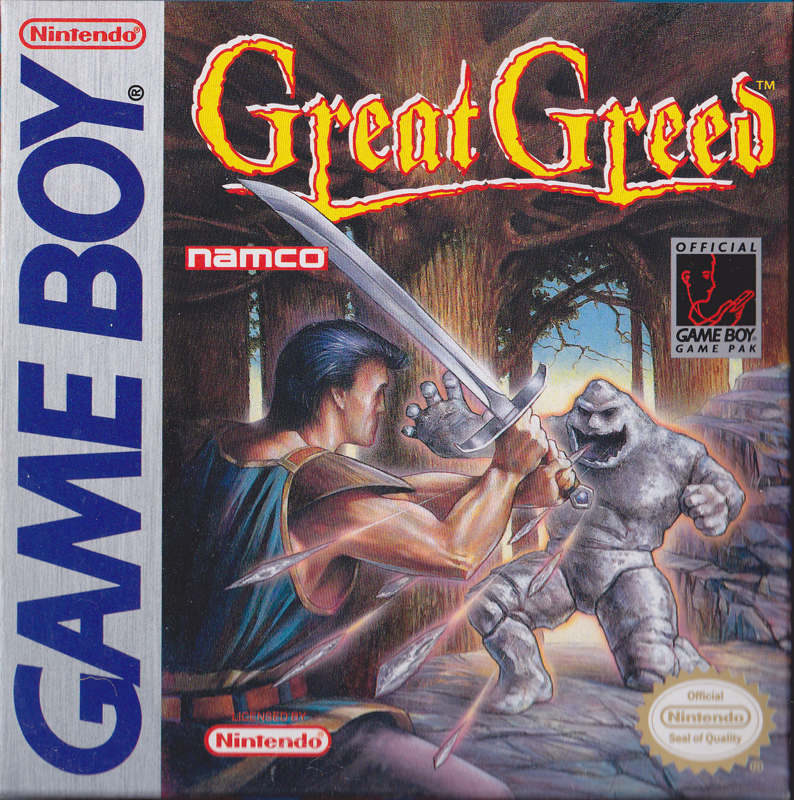
Game Boy #3: Great Greed

Developer: Namco

Publisher: Namco

Release Date: 4-1-93


Now I know what the best non-Pokémon or Final Fantasy RPG on Game Boy is. Great Greed is an excellent game that pushes the limits of the console. Of course, it’s also one of those games that was $20 five years ago and now goes for about $150. I really hate the state of retro gaming these days. Luckily this is 2022, so it’s not hard to find a cheaper way to play. It’s certainly worth checking out though. It just shows what can be accomplished when a high-quality developer puts their heart and soul into a game.


Great Greed is a classic turn-based RPG, which of course is my favorite kind of game. Most RPGs on Game Boy are slow, but this one moves surprisingly fast even when level grinding. There is quite a bit of level grinding involved so be warned if you don’t like that sort of thing. They are able to speed things up by getting rid of the menu screens during battles. All the actions are mapped to specific buttons with the control pad used for spells which you have to equip. It works very well even if it means the options in battle are somewhat limited. The spells are mostly typical in this game, and I didn’t use offensive ones very often. I mostly used healing and status spells.


 Great Greed is one of those games that starts out silly but gets more serious and difficult as it goes on. The first person you meet is named Microwave, so you know it’s going to be a weird game. Most of the characters and places have food related names. It has both a fantasy and technological setting. In one area you have to save a pop singer from a record store which includes giant spinning records on the floor. However, Bio-Haz, the villain in the game, is menacing enough to never let things get too silly. It is well-balanced in its presentation. It also has a large amount of narrative for a Game Boy game. It’s very impressive in that way.


Be careful though, the last third of the game gets very difficult. Once you’ve passed through an area you can never go back. That means that when you get to the last town you are stuck there. Of course, it’s just about the only town in the game with no inn, so I struggled for a bit, especially since the final dungeon was full of difficult monsters. There is a person that sells healing items, but he’s not in a regular shop so I didn’t find him for a long time. Luckily leveling up fully recovers the hero, so I figured out how to time my level ups so that I could recover at just the right time. I thought this was going to be yet another RPG that played through the first two-thirds of only to get stalled and never finish. Luckily I was able to persevere. Hopefully I can do the same with The Sword of Hope II. I don’t have that many more Game Boy RPGs to finish after that one.


 There is one moment that is a little creepy though. At the end of the game the king lets you get engaged to one of his daughters. After the credits are over you can read biographies of all the sisters. It turns out that only one of them was over 18, and the youngest was only 11. Imagine accidentally getting married to an 11 year old. At least no marriage takes place, and is implied that the hero and his betrothed weren’t going to be married for a while. Still, it’s one of those semi-gross moments that comes up in JRPGs from time to time. It doesn’t ruin the game, but it was a weird thing to discover at the absolute last second.

 So this one is going high up on the list. It’s at a very respectable 22nd right behind Tails’ Adventures. It’s one of the better 8-bit RPGs that I have played, and it’s a shame that it has gotten so expensive. It’s the kind of game that only the most dedicated RPG players have probably ever heard of, and the high price tag certainly doesn’t change that. I don’t think it was ever on the 3DS store either like so many other old handheld RPGs. It’s definitely a game that deserves some more attention. I feel like I’ve gone a little easy on Game Boy so far. All three games I have played have been high quality ones. I need to play some licensed crap just to even things out. Perhaps I will do that in the near future. Stay tuned!


Game Boy Quality Percentage: 3/3 or 100%

images are from mobygames.com


Game Boy Rankings

1. Great Greed

2. Knight Quest

3. Super Mario Land