Wednesday, June 28, 2023

Atari 2600 #17: Challenge

Developer: Funvision

Publisher: Zellers

Release Date: No idea


Challenge is a simple game with a boring name, so of course we’re going to talk about that box art. What are the Ghostbusters doing on some random Canadian game about a duck moving through a maze? I wish there was some funny story behind it, but the truth is probably much more boring. Likely it was because Zellers didn’t care, and they were dealing with an unscrupulous Taiwanese bootleg game company.  Back home Funvision made fairly generic covers that were frequently reused. The skull mountain image from Inca Gold is probably on dozens of games. For Zellers every game had its own artwork even if it didn’t match the game. Maybe Funvision had run out of their stock images and this was the only one they had lying around. It could’ve also been a simple case of trying to sell a generic game by connecting it with a popular movie. It’s impossible to say for sure, but it’s a bit funny considering Zellers was already getting in trouble with Atari. Did they really want to bring Columbia Pictures into it as well? I know you guys were all the way up in Candada, but half the cast of Ghostbusters was Canadian. What if Rick Moranis saw this while he was visiting his family for Christmas? I suppose it had little impact in the long run though considering no one’s heard of the game or the company. It does make dating these games a little more interesting. I thought Zellers’ scheme was done by 1983, but Challenge couldn’t have been released until the summer of 1984 at the earliest. That was pretty late in the game to be releasing new 2600 games. Most of the 3rd parties had already closed up shop by then. Since this fits into the “Atari 2600 games released after my birth” category I am interested to talk about it. Let’s get started already.


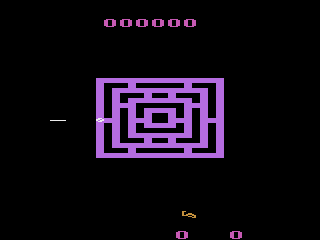
As I previously stated, in Challenge you play as a duck moving through a grid. You follow a path which leads up, left, and down while avoiding a duck’s mortal enemy, the mouse. I know much has been written about the rivalry between these animals, but it can never be said enough. Ducks and mice hate each other. Okay so only the first of the game’s four levels has mice, but the other three creatures aren’t listed in the instructions and I can’t tell what they are. That usually isn’t a good thing, but I’m not going to knock any points off of this game for having unclear graphics. This really could be all squares without hurting the gameplay any, so it’s nice that they even tried. Basically this is a game where you move vertically while avoiding the enemies moving horizontally. It’s all about timing as the different rows will move at different speeds, and you can’t get by purely on memorization. Your goal is to reach the end of the path where you will collect points based on how much time is left on the clock. The game gives you a whole six minutes which is far more than enough so it’s really no hurry. As you move across the screen a positive message will slowly reveal itself which is a nice touch. I like being told that I am very good.


So Challenge is a simple, leisurely paced game that feels more like a car trip toy than a fully fleshed out video game. In spite of this I still had a decent time playing it. The game turns out to have an accurate title, and I always appreciate a good challenge. There’s something satisfying about speeding from lane to lane narrowly avoiding catastrophe. Even waiting for lanes to clear up was interesting because I constantly had to stay on the move. I haven’t been able to get past the second level yet, but I liked the game enough to consider going back and trying again.


I still can’t quite put it in the good section, however. I think it’s too repetitive for it to leave much of an impact on the average person. The game boasts having four different levels, but the only thing that changes between them is the amount of enemies on the screen. It’s the same path with the same goal every time. It’s amusing for a time, but the options are so limited that it gets tedious after a while. Still, it exceeded my modest expectations so that’s a win. It probably helps that I played Inca Gold first. That game would make just about anything look good by comparison.


Challenge actually ended up going farther down on my list than I expected. It’s hard for a simply okay Atari game to get above many other okay games. So it’s all the way down at 99. Hey it made the top 100, which these days isn’t too bad a place to end up. I have rated more games than I expected, so even games down that low are worth a look. It’s number 12 on the Atari list, but there are a lot of good Atari games, so it won’t stay that high for long. Challenge was pretty good for an obscure foreign release and that gives me hope for playing more games that no one has ever heard of. There really are more games than you think. 


Ranking List

Tuesday, June 20, 2023

Atari 2600 #16: Inca Gold

Developer: Funvision (probably)

Publisher: Zellers

Release Date: 1983?


You know when I was in Canada a decade ago I had to go to a Zellers. They’re fairly legendary in Atari circles for releasing pirated games with weird cover art. Of course they quit selling them in the early 80s, but I still had to see one of the stores for myself, and I did see some Zellers carts at a local used game store. I also went to Niagra Falls, but who wants to hear about that when I also went to a local department store? For the most part Zellers games are re-releases of more common games with mostly different titles. Keystone Kapers was renamed Busy Police for example. So why am I talking about a group of pirated re-releases on here? Well, there are a few games that weren’t sourced from already released U.S. games. Two of them, Challenge and Time Warp, never received any other NTSC release while a couple others were released elsewhere, but either arrived in the US much later or appear on much rarer carts. Inca Gold is one from the last group. It’s one of the four original games made by Funvision which was an infamous Taiwanese game pirating company. It’s probably where Zellers, and a whole bunch of other obscure companies, sourced their games from. They were certainly prolific, and Inca Gold was released by numerous publishers under many different names. I have no idea what the game was originally supposed to be called, but you’ll also find it under names like Pac-Kong and Spider Kong. You can probably tell by these names that it is a Donkey Kong Clone. It also appeared under the name Spider Maze by the equally dubious Canadian company K-Tel Vision. So this is a game that has gotten around. If you are trying to get a complete NTSC set of unique carts than Inca Gold is the better choice even though it’s still quite expensive. So while not cared about by 99.9% of the world, this game is important for that certain type of collector. Of course it’s one of those games where tracking it down and adding it to you collection is the fun part. I doubt very many people actually want to play it. At least it’s an interesting story.


 When I first powered up Inca Gold I thought it was broken, or perhaps a PAL game mistakenly mis-labeled as NTSC. All those blinking objects on the screen couldn’t be right. However, that’s just what the game is supposed to look like. In still photos all seems normal. It looks like your run of the mill Donkey Kong rip-off. There were a ton of those by 1983, and some of them are very good. The main character looks like Mario but more generic while the monster at the top is easily recognized as a Donkey Kong stand-in despite being a giant spider. The gameplay involves jumping and climbing ladders just like the real game. If made well this could be a decent game. Too bad Inca Gold was so poorly put together. I’ve already mentioned the blinking rocks, but it’s the game’s most distinctive feature, and also the most annoying. The blinking rocks are almost nauseating. Atari Pac-Man gets critizism for having flickering ghosts, but in that game they follow predictable paths and cycle through fast enough that it doesn’t distract from the gameplay. In Inca Gold the objects are so large, bright, and spaced out that it’s hard to even tell what’s going on. It looks like a 3D Sega Master System game without the glasses. That’s how disorientating it is. You don’t play Inca Gold for points. You play it to see how long you can go without getting a headache. They also move around seemingly at random and take up so much space that you can usually tell if a level is going to be winnable in the first few seconds. Sometimes they leave big gaps to jump through and sometimes they come right for you. This would still be bad if they were solid. The flickering just emphasizes the low quality.


The problems don’t end there either. For one thing movement is slow and gameplay is tedious. With only three random objects in the sky and one that moves back and forth on the top row there is nothing to do besides climb ladders and jump. It shows off just how brilliant Donkey Kong is. In Donkey Kong the action never lets up. The first level has the famous barrels which constantly come at you following different paths. Because they can come down any ladder and don’t all follow the same path it requires fast reflexes and constant attention. On top of that there is a fireball slowly working its way up to you so you have to hurry. In Inca Gold there is very little action. You’re either going to get hit by a rock or you’re not. Sometimes you have to time your jumps a little, but for the most part the action stays away from you. The jumping is also bad which is unfortunate since there is so much of it. You have to jump right at the edge of a platform to make it safely to the next one, and this can be tricky even after playing for a while. At least you get consolation points if you fall down and die on the higher levels. Scoring brings up another sign of the carelessness that went into Inca Gold. Even though points are only scored on reaching the top or dying they still accumulate fairly quickly. In spite of this the score only has three digits. It only takes a few rounds to roll the score over which is just odd. I know it’s not difficult to keep up with thousands on your own, but it’s just not as satisfying if the score shows 47 instead of 2047. You can’t take a picture of the first score and show it to your friends. I doubt Inca Gold comes up too often in high score challenges, but the three-digit scoring would ruin the experience anyway. Of course playing Inca Gold is hardly an experience worth ruining in the fist place.


 This is definitely one of those “worse than ET” games. That seems to always be the metric that bad Atari 2600 games are measured by. Of course Inca Gold had no cultural impact whatsoever, so we’re still waiting for a worse Atari 2600 game that actually mattered. There may be some 60-year-old Canadians out there who played it back in the day, but as far as NTSC games go this one is low down on the list of well-remembered Atari games. On the Atari list it is next-to-last at #15. On the overall list it is all the way down at #119 which is just a little above the complete train wreck section. It’s too minor of a game to be quite that bad so at least it’s saved from the bottom ten. That’s some kind of silver lining, I guess. 


Atari 2600 Quality Percentage: 9/16 or 56.25%


Ranking List

Wednesday, June 14, 2023

Atari 2600 #15: Wall-Defender

Developer: Bomb/Onbase

Publisher: Bomb/Onbase

Release Date: 1983


There’s not enough written about all the 3rd party companies that sprung up during Atari’s boom years of 1981-1983. It was over these three years that the majority of all 2600 games came out. Activision came up with the concept and Apollo showed that you could make games even without much experience, so everybody thought there was money to be made. By 1984 they were almost all gone. Even big companies like Parker Bros. and 20th Century Fox couldn’t weather the storm. What hope was there for the smaller companies? Bomb was certainly one of the smallest and most obscure of the 3rd party publishers. There is very little information about them online, but they appear to be an Asian company that was trying to branch out in the the US market. That makes sense why they decided to name their US division something synonymous with failure. They had probably never heard the term before. They managed to release four games in America in very small quantities sometime near the fall of 1983. There are no exact release dates or reasons for their rarity. And these are some rare games too. All four are about as rare as it gets for game actually released in stores. Usually there’s an interesting story behind extreme rarity, but if there is one behind the Bomb games it has been lost to time. Another quality of ultra rare 3rd party game is low quality. Happily, Wall-Defender breaks the trend. It’s actually a decent game. Thankfully it is now 2023 and we can play all the rare 2600 games without much effort. Although this game is good, I’m glad I didn’t have to pay $100 to review it.


 Wall-Defender is a tense and claustrophobic shooter. The play field is small and only gets smaller. That can be a detriment in some games, but in Wall-Defender it works. You play as a typical Atari spaceship hopelessly trying to keep your walls from being destroyed. You will eventually lose of course, but why not try to stave of the inevitable as long as you can? You defend yourself by moving around a rectangular set of walls while shooting at aliens who come in from certain spots on all four sides of the screen. The middle is the most common place, but they can spawn closer to the sides as well. You don’t take damage yourself in this game, but instead your walls get damaged as the aliens crash into them. Every layer can take ten hits. The walls will get darker as they get closer to destruction and start blinking after seven hits If you are on the outer layer when it is destroyed than you are destroyed too. You then get to watch your character sadly float away into the dark vacuum of space. It’s a nice touch. There are also big aliens who take out your wall in a single hit. There is less distance to travel when the walls get smaller so in a way it gets easier as it goes on, but of course this puts you closer to a game over. Walls will regenerate after successful rounds, so it’s not hopeless if you do something stupid early in the game and start losing walls too soon.


For such a simple premise this game is full of tension and strategy. The aliens can pop up anywhere at any time and they only get faster as the game goes along. There is always that decision you have to make when one spawns on the complete opposite side of your rectangle. Do you try to go get it even though chances are low that you will make it over there, or do you stay closer to where you are and hope something spawns closer? Sometimes you have to sacrifice a couple of hits to make it through a round. It’s a game as much about decision making as it is about accuracy. It also gets very fast after a few rounds. Your walls get smaller, the aliens become more frequent, and it gets to be very exciting. The graphics are sparse, but there are several different aliens and they do look not of this Earth. I appreciate it that they took the time to make some actual aliens instead of just using generic shapes. I just wish I knew who actually made this game. It’s strange how anonymous older games can be. This one takes it a step further. Not only do I now know who made it, I don’t even know what country it’s from. I barely have it narrowed it down to a continent.


 So, Wall-Defender is a fun game that was released forty years ago and went virtually unplayed. It came out in small quantities by a practically unknown publisher right as the US market was collapsing. This is one of the reasons I love living in the internet era. Today I can type the name into Google and within seconds be playing. I’d still love to have a physical copy of course, but playing Atari games on the computer doesn’t alter the experience all that much. In some respects, we live in a golden age. At least that’s how having access to rare Atari games makes me feel.


So Wall-Defender definitely makes it up into the good section of games. I know it has a reputation for low quality shovelware, but the Atari 2600 has a lot more good games than you think it has. Now it’s not going up particularly high in the good column, but most of the 2600 games are going to be stuck in that section by virtue of their age and simplicity. It’s just hard to compete with games that got a ten- or twenty-year head start. It’s at #66 on my list which is just below the even rarer Red Sea Crossing and just above the kooky Bible Buffet. I’m going to play some more bad ones of course, but I’m excited to uncover even more hidden Atari 2600 gems.


Atari 2600 Quality Percentage: 9/15 or 60%


Ranking List

Monday, June 12, 2023

Sega Master System #7 - Ys: The Vanished Omens

Developer: Nihon Falcom

Publisher: Sega

Release Date: March 1989


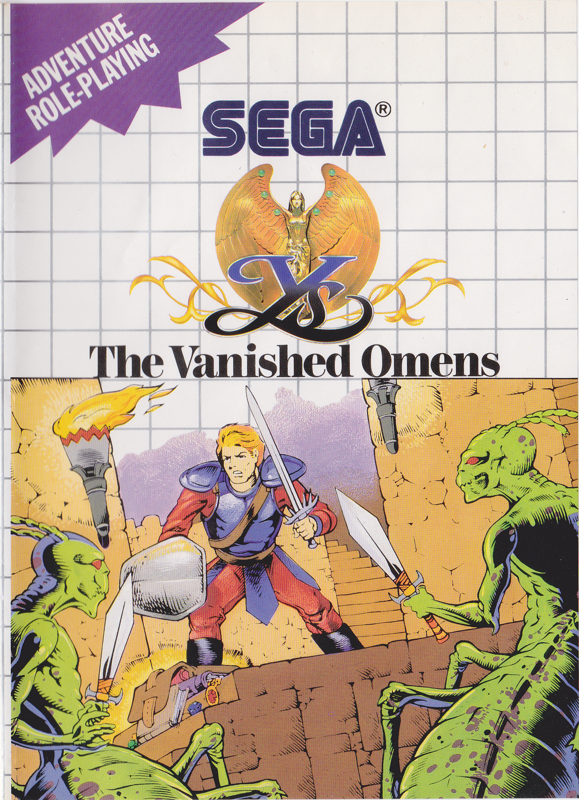
 Ys feels like the perfect RPG series for the Sega Master System. I’m not sure how it happened, but the Master System has the pause button on the console itself instead of on the controller where it belongs. It was an extremely annoying feature that made playing any game that needed something like a menu screen somewhat of a pain to play. You either have to be constantly bending over to push that button or use your feet. I’ve always referred to more complex SMS games as big toe games for this reason. Thankfully, Ys is not a big toe game. It is just about the most button-lite RPG ever made. You don’t even need a button to attack. You just crash into monsters with the control pad. You play through about 98% of the game while using only one button. The other button is only used for occasional action items. So in that way it is perfect. Sadly, however, the SMS just isn’t quite up to the task of handling Ys. I know this port has always gotten good reviews, and it was for many years the easiest way to play Ys in North America, but to me it feels like a bad port. Let’s investigate a bit further.


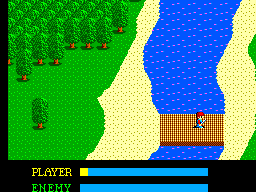
 I can see why people want Ys to be good. There are only three RPGs on the Master System in the US, so it stands out just by being different. However, this game is just too slow. It really only plays like an RPG for the first half, and during that time it’s one of the slowest and most boring grinds in the history of gaming. The nature of the combat means that there is no strategy at all. You just run into enemies until you slowly earn enough money to buy better equipment or gain a level. The overworld is very small so there’s not even that much to explore. You also move painfully slow in general. It feels like about half the speed of the excellent TurboGrafx-16 version. Health regenerates in the field, so there’s a lot of standing still. This becomes especially painful in the later part of the game with a full health bar. You can find a heal ring which regenerates health in dungeons, but it regenerates much slower than it does in the field. Standing still is no fun and there’s no reason it has to be so slow. I can only imagine what it must’ve been like playing this game before smartphones. I’d just have to stare at the wall while I waited for my health to refill. Hydlyde has always been criticized for doing the same thing. Why does Ys get a pass?


In general there’s not that much equipment to buy or many levels to gain. After all is bought and leveled it becomes an action game taking place in a huge tower. This section of the game is much more fun. There are plenty of of puzzles to solve and challenging bosses to fight. The bosses are all strategy which is a refreshing change of pace after all the mindless bashing. There are still too many annoyances for it to save the game, however. This is where the slow health regeneration really started to take its toll on my sanity. The monsters just get harder and with no way to get stronger they never get any easier. It gets to the point where I have to fight one enemy, stand still for a minute to regenerate health, and then save just to make a little progress. I also hate that I can’t use my potion during boss fights. I know it makes the game more challenging, but why even let me have one if I can’t use it when I need it? Sometimes I feel like this game is just messing with me.


 Ys is a tough one for me because I really want to finish it. Master System games are typically difficult, so I haven’t finished that many of them. I would also love to have a classic console on which I beat all the RPGs. For now, however, I just can’t stomach it. It’s hard to give a good score to a game that I actively want to stop playing. It’s not even that long of a game. So I’m sorry everyone who has reviewed this game and raved about it. It’s just not fun to play. I suppose if you enjoy a game where you move for five seconds and then stand still for a minute than this is the game for you. I sure hope you aren’t that person.


 Sometimes I look at my list and wonder what I was thinking. There are often big gaps between when I play certain games, so some of my choice surprise me. Is Beethoven really better than Galaxian? I guess so! Ys is ending up higher than I expected because the just okay games are hard to rank. It makes some kind of sense because they are the most forgettable neither standing out for their quality or badness. I remember Demon Crest though, and I can positively say that I liked Demon Crest more than Ys. So that’s where it’s going. Congratulations Ys you are now #70. You may not be that much fun, but at least you are memorable.


SMS quality percentage: 3/7 or 42.85%

Sunday, May 21, 2023

NES #29: Ninja Gaiden

Developer: Tecmo

Publisher: Tecmo

Release Date: 12-9-88


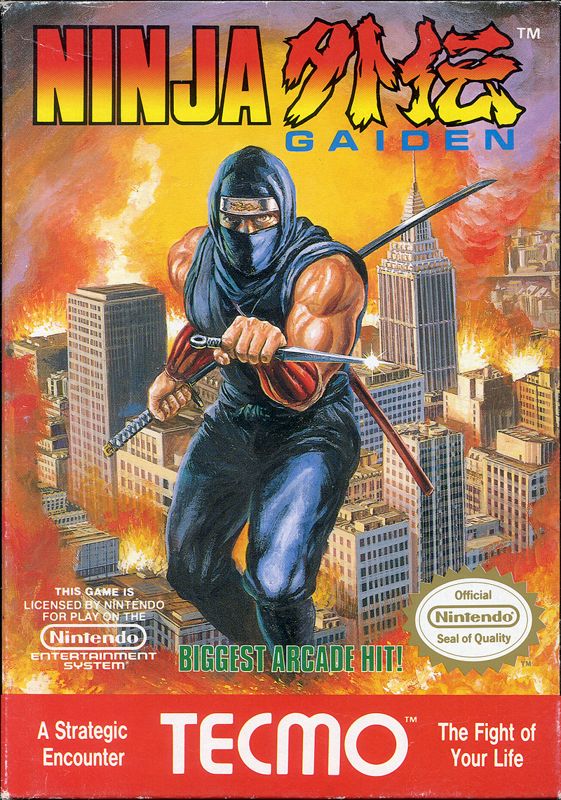
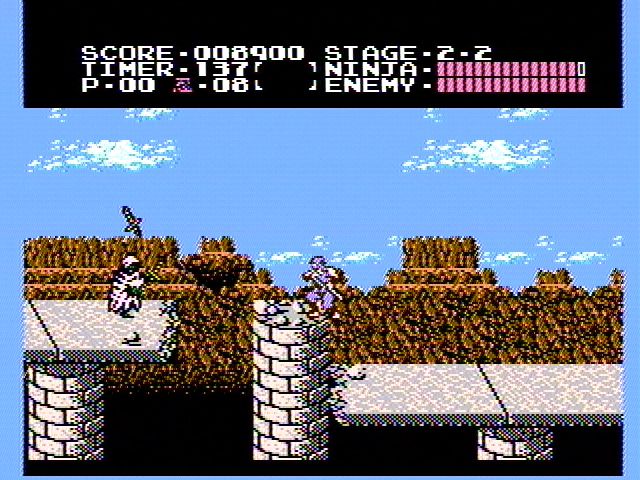
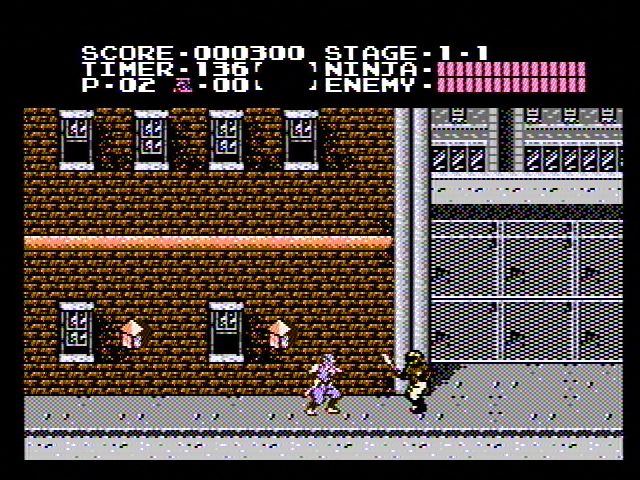
 Ninja Gaiden is truly a landmark game. It is the game that introduced gamers of my generation to integrated storytelling. It was not the first game to tell a story of course. Games had at least had a token storyline for almost as long as games had existed. However, there had never been a console game to tell a story quite the way Ninja Gaiden did. Complex stories were mostly confined to more complicated genres that didn’t appeal to kids as much like RPGs and adventure games. Even more complicated NES games like The Legend of Zelda kept most of the lore in the instruction manual and did very little storytelling in the game itself. Ninja Gaiden is an action game. At the time action games had very little story at all. You might get a text heavy intro if you were lucky. Ninja Gaiden sneaks great comic-esque cutscenes in between every chapter. In 1989 I had never seen anything like it. Who can forget the classic opening featuring two dueling ninjas? Ninja Gaiden sets itself up right away as something more grown up than the typical NES game. I was instantly hooked. Of course Ninja Gaiden also illustrates the danger of narrative gaming, especially in the early days. If you were a typical kid you might’ve been wowed by the intro, but never had the chance to find out how it all ended.  


Ninja Gaiden is difficult. I feel that the internet exaggerates the difficulty of many old games, but Ninja Gaiden is the real deal. I’ve been playing this game for thirty years and have it just about memorized, but I still have trouble as the game rolls along. I did legitimately beat this one many years ago, but I’ve never been able to repeat that achievement. Like so many NES games the difficulty comes both from design and flawed execution. The developers loved putting enemies in weird places like tiny unavoidable ledges and high platforms where they can get you but you can’t get them. Sometimes they are almost impossible to defeat without a special weapon, so you’d better hope you have the right one and enough points saved up to use it. Everyone knows about the infamous swooping birds, but luckily they are fairly rare. Still, they are so annoying that they have been written about to death. Enemies also respawn almost instantly if you move the wrong direction. Moving backward is needed because of all the platform jumping, so expect to see plenty of respawning. Thankfully the game has unlimited continues, but it does not have a password. If you are playing on original hardware make sure you clear out you afternoon if you actually plan on finishing it. Oddly most of the bosses are fairly easy. They have very easy to memorize patterns and receive a lot of damage from your attacks. Of course this all goes out the window in the game’s final chapters. The last two bosses are brutal even if you know what you are doing. Ninja Gaiden defines Nintendo Hard.


 Luckily the levels are fun to play through in spite of the difficulty. It has that wonderful NES mix of unique level designs with bizarre enemies. I get fighting other ninjas, but why are there boxers and witches scattered about? And why do they want to kill me?  I love old games for their bold unreality. You can have strange ruins filled with physically impossible platforms and out-of-place enemies who patrol the same five inch ledge for infinity without anything feeling like it doesn’t belong. It also has great visuals and music. Every different level is distinct and they move in different directions. It’s not just left to right, so you never know what the next level is going to be like. The music is some of the most iconic on the system, and the developers did a great job of making sure the songs fit the mood. I can tell this game was made with great care.


So Ninja Gaiden is a fun game to play even if you don’t plan on finishing it. It’s great for that nostalgia fix. However, it does illustrate the difficulty of telling a story while making a fun, engaging game. It’s a debate that rages on to this day. In 2023 of course you can go on Youtube and watch the ending to almost any game you want. That was not the case in 1990. You might get some screenshots in a magazine, but if you weren’t good enough than you’d never know what happened. This became especially troubling when Ninja Gaiden II came out and continued the story. If you never finished the first game should you even play the second one? The third game is much rarer, so I guess not as many people made it through the gauntlet and saw the story wrapped up. I know I haven’t. I should work on that.


Ninja Gaiden is still a personal favorite of mine, so like most of the classic NES games it is going up high on my list. I know I”m already a bit Nintendo heavy, but NInja Gaiden is going in at #10 knocking out 8-bit Sonic the Hedgehog. My goal at this point is to find 101 good NES games, and this gets me one step closer.


NES quality percentage: 15/29 or 51.72%

Monday, May 1, 2023

Intellivision #2: Astrosmash

 Intellivision #2: Astrosmash


Developer: Mattel

Publisher Mattel

Release date: 10-15-81


These days it’s hard to write about the original Intellivision without bringing up the doomed Amico. At this point people are still trying to figure out the true intentions behind the project. Was is simply a failed console that started in good faith or an investment scam from the get-go? Was this a case of inexperienced console developers getting in over their heads or was there something more nefarious going on behind the scenes? Hey, but they made all those videos showing off the games, the must’ve meant they were trying to make it, right? Well not necessarily, because the types of games they were showing off could’ve been thrown together very quickly without any true intention of release. One of the four deep dive games they showed off was a remake of Astrosmash, and they really hyped it up as a classic game that people are clamoring to play forty years later. It was something more unscrupulous Amico defenders used to defend the project. Everybody loves Astrosmash, right? Who wouldn’t want a remake in the 2020s? Of course, the answer to that question is almost every person on planet Earth. If you want to play Astrosmash you have almost unlimited options available. Get an Intellivision compilation on an already owned console or even an original Intellivision. It’s one of the cheaper classic consoles, and it is worth checking out. Of course, that’s all beside the point. The main problem with using Astrosmash to sell the Amico is that Astrosmash just isn’t that good of a game. It’s not even all that memorable. The only thing that makes it stand out is how much different it is than the rest of the Intellivision library, and as we know different doesn’t always mean better.


 Astrosmash is a game that is as simple as they come. You are a ship stuck to the ground that can only move back and forth such as in Space Invaders. The object is to shoot things until you die. If you shoot objects in the sky you gain points and if they hit the ground you lose points. That really about sums it up. It’s strange for an Intellivision game to be so easy to summarize. They had some weird and complex games. It does have a bit of that Intellivision flair though. At certain scores the background color will change up until it turns gray and then repeat. This does give the game a sense of accomplishment. The screen can be filled with objects moving at different speeds which is impressive. The graphics are clear, and the sound affects are effective. If you want to play a brainless shooter this is certainly a choice. However, I feel that Astrosmash crosses the line from brainless to boring. This is not the exciting twitch shooter that can define a console.


The more I play Astrosmash the more surprised I get by how little strategy is needed.  There are a few things that will chase you or shoot at you, but 98% of what you encounter will be indifferent rocks that do nothing but fall. Sometimes you will shoot them wrong, and they will split in two, but the two pieces will just fall at an angle. There are ships that will shoot at you, and I live for these ships. It’s the only time in the game that I feel alive. Who wants to shoot boring old rocks when there are alien invaders out there? There are also bombs which will cost you a life if they touch the ground, but even these don’t thrill me much. It’s so easy to rack up lives that losing a few doesn’t really matter. There is no strategy required to get high scores besides moving around a little and trying not to get hit by rocks. The games can also last a very long time without much changing. Objects get faster, but this isn’t enough to keep things interesting. I got tired of playing long before I lost all my lives when I was playing for this review. When I turned it off I had roughly 50,000 points and 22 lives. I am better at this game than I used to be, but boredom is never a good sign. At least someone thought to put rapid fire in the game so your thumbs won’t fall off trying to push those stiff buttons on the Intellivision controller.


 It’s always great ending a review talking about how the game is so shallow that there’s nothing left to say. So let’s do it. This game is so shallow that there’s nothing left to say. Mattell really pushed this game back in the day. They even gave it away with consoles. It shipped almost 1,000,000 units which is almost a third of total Intellivision consoles sold. Of course, this doesn’t say much for the game itself. The obvious reason they promoted it so much is because it’s the Intellivision game that most resembles an Atari game. In fact, it resembles several Atari games without borrowing the best parts of any of them. I can understand trying to copy Atari in the early 80s, but Intellivision could, and later would, do better. Still, this isn’t a terrible game and I know it appeals to some people so it’s going to end up in the middle of the list at #72. It’s not quite in the good section, but it’s a textbook okay game.  I’m not an expert in the Intellivison library, but I imagine that this will end up in the middle of that list as well. I’ve only ranked two so right now it’s on the bottom, but don’t worry Astrosmash fans, it won’t stay there.


Intellivision Quality Percentage: 1/2


Intellivision Rankings


1. Pinball

2. Astrosmash


Ranking List


screenshots are from mobygames.com

Wednesday, April 12, 2023

Nintendo Switch #8: Pokémon Scarlet/Violet

Developer: Game Freak

Publisher: Nintendo

Release Date: 11-18-22


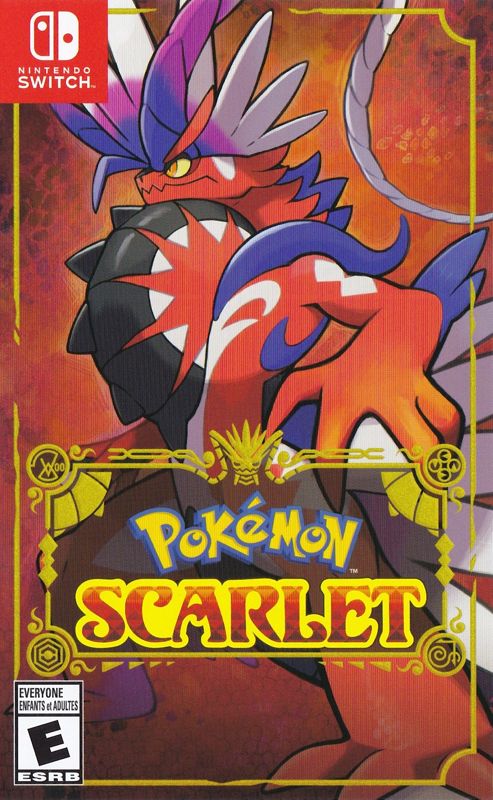
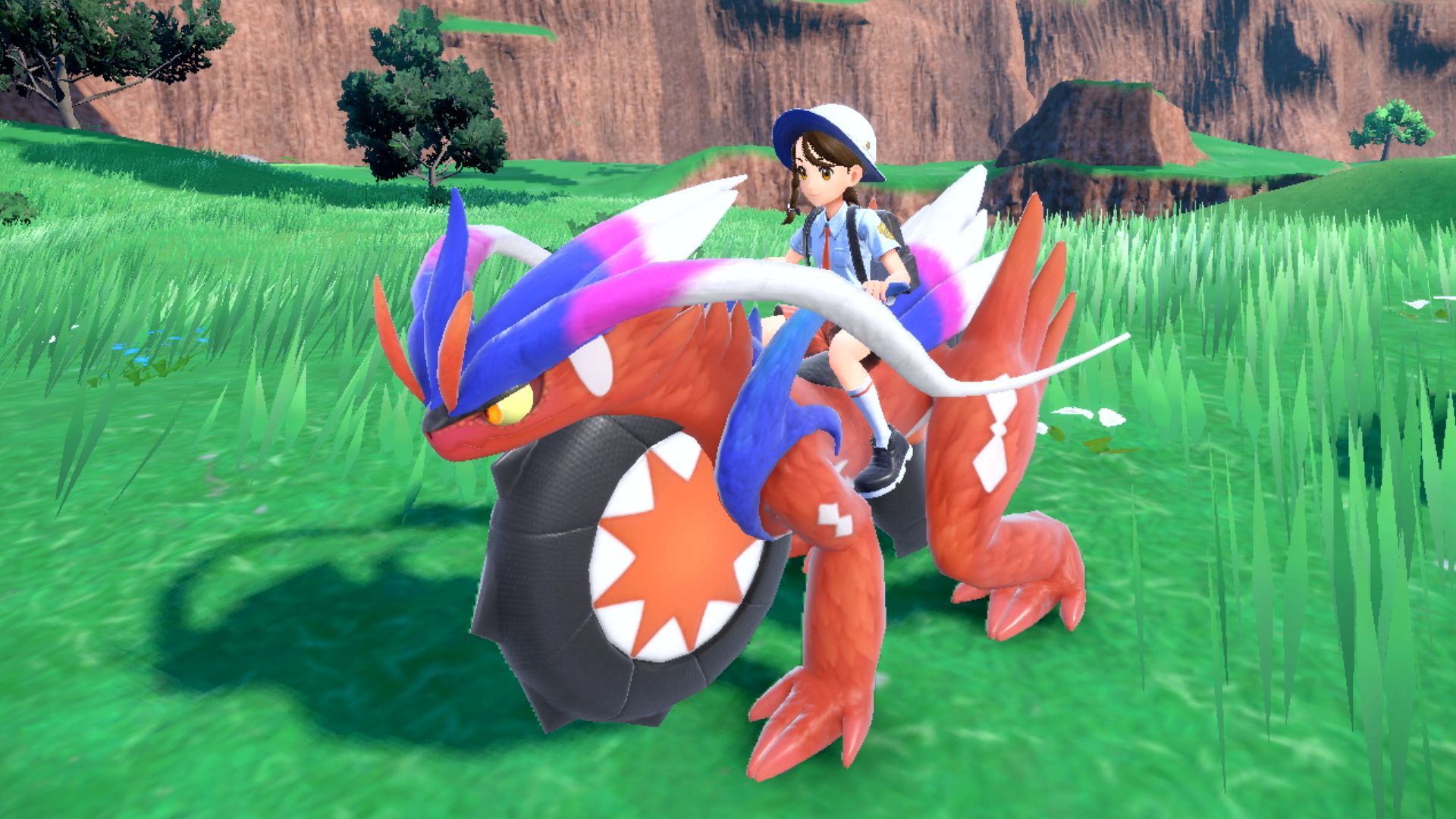
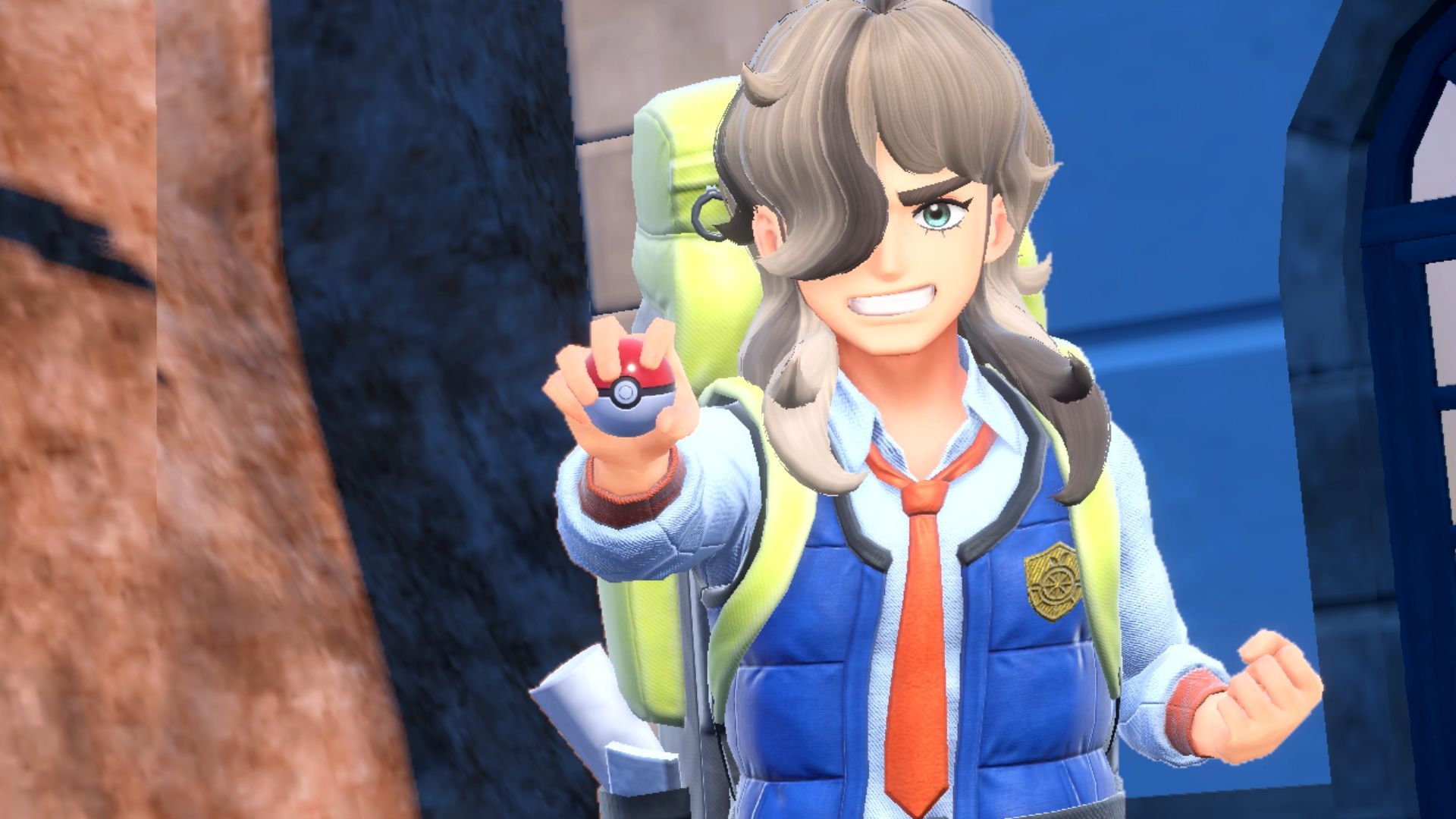
Okay let’s talk about the new Pokémon games. They certainly garnered their fair share of controversy, and I will get that out of the way first. It is completely fair to criticize the game for being buggy and slow. Switch games are expensive, and when you buy a game for full price you expect it to work, and the release date makes it obvious that they were trying to get it out before Christmas and didn’t have time to completely finish it. This isn’t just a Pokémon problem as games are extremely hard to make and timing is everything. The game was mostly fixed by the time I played it, but with some Pokémon only appearing in the first few months there was actually a reason to be an early adopter. So that’s the negative side. It’s something that will always be discussed, and hopefully it’s a lesson that Nintendo and others will learn from although they probably won’t. Now with that out of the way let’s get to the fun part. Just what is this game like?


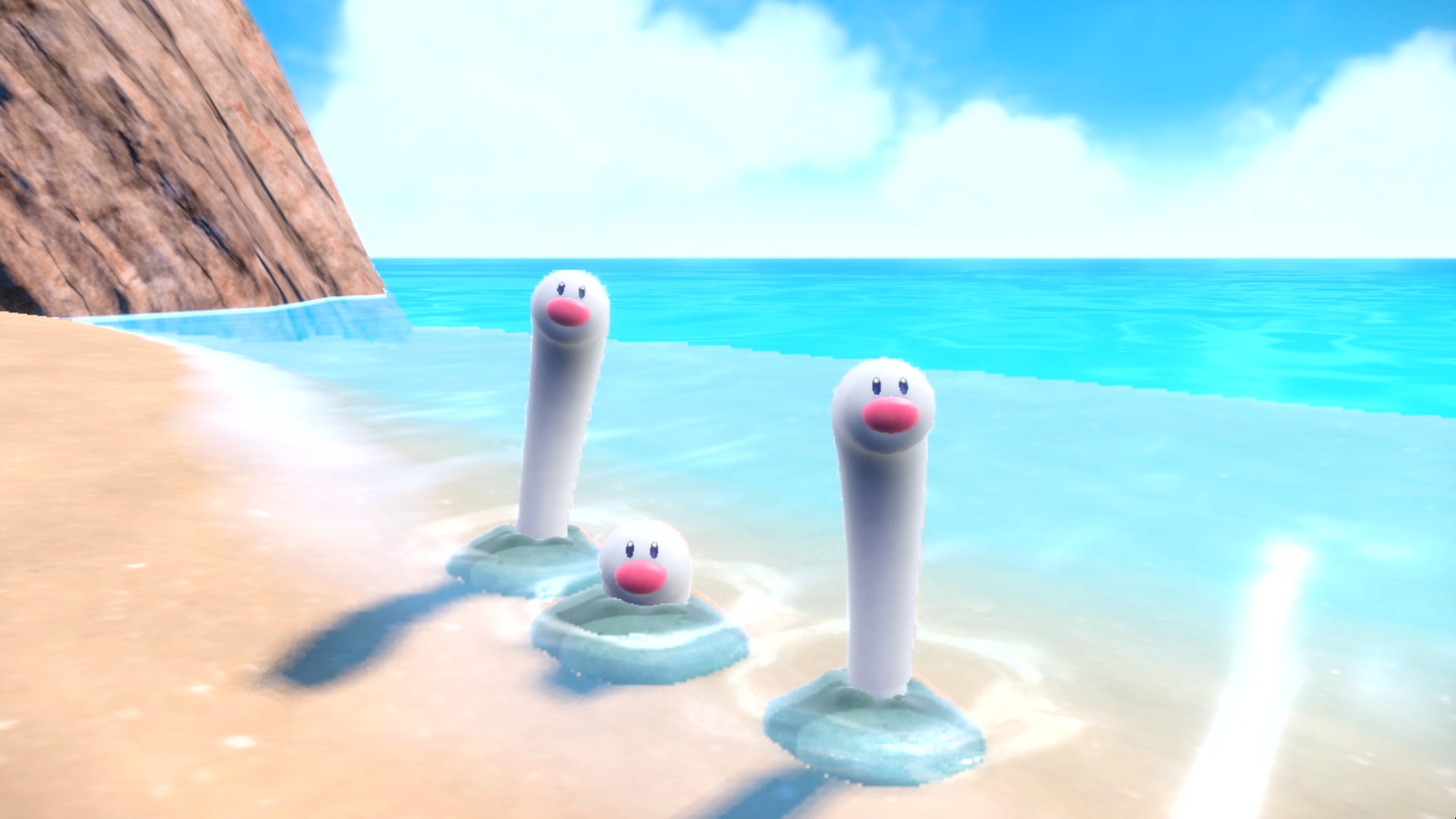
At first Scarlet and Violet sound like a radical departure from previous games. So many of the old conventions are gone. There are no more ledges, not long caves full of Zubats, and trainers don’t attack unless you talk to them first. Pokémon wander all over the place instead of being exclusive to tall grass and caves. The most famous change, however, is the new open world concept. I have to say the open world was extremely fun, and it really does change things. Change is a good thing, but what’s interesting is how much the radical changes actually strip the game down to its pure essence. This game is 100% pure Pokémon.


If your main goal in Pokémon is catching and training than this might just be your perfect game. The story starts as a slim one, and you’re sent out into the world within the first hour. Up until its surprisingly poignant and serious conclusion the plot is mostly confined to quest locations without much in between. This means that it’s time to get out there and catch some Pokémon. They are everywhere in this game, and while a 400 entry Pokedex doesn’t sound that gigantic, in practice it is almost overwhelming. I found myself constantly catching and raising Pokémon to a degree that I had never experienced before. It’s much easier to plan for specific destinations, so I could always put together a team strong against local Pokémon and level up quickly. All the quests are labeled with Pokémon type, so that’s easier to plan for as well. It’s all about character building, training, party building, and hunting. I love that all Pokémon are visible now. I’m not forced to fight 100 Weedles while looking for that single rare Pikachu. I can target higher leveled creatures and raise levels without nearly as much tedium. I’m not sure if I’ve ever had more fun catching and raising Pokémon before, and that’s with 20+ years under my belt. It’s certainly the high point of the game.


 My one major gripe is that it doesn’t lean into the open world RPG concept enough. Within the first hour of gameplay all the quest locations are marked on the map. It’s not like and Elder Scrolls game where everything is wide open and discovering new locations will open up new quests. I know some of you are going to groan when you read this, but I really would’ve enjoyed more fetch quests. In a game that’s all about leveling up it’s nice to have more excuses to explore. Why not throw in a wider variety of quests? Side quests lessen the grind and encourage exploration. Why not have random townspeople asking for you to defeat 10 Nosepasses? I promise that kind of thing is fun.


That gripe is a little bit more personal I know, but another more general critique I have is that many of the new features don’t add much to the game. You can now make your own TMs by collecting certain items and spending points. It’s a neat concept, but I just never felt the need to make TMs all that often. Sure I used it occasionally, but considering the sheer amount of crafting materials that are out there it feels like the developers were expecting me to make hundreds of TMs. Then there’s the controversial sandwich making. I had fun making them, and I love the eating animation, but the perks that came along with the sandwiches never seemed to add up to much. The fact that you have to actually set up a picnic and then build the sandwiches yourself piece by piece makes it take too long to be enticing as well. Still, it is fun to see just how much bacon you can pile onto one sandwich.


 Overall, however, I had a great time playing Scarlet (it was three dollars cheaper than Violet in case you were wondering why I chose it). The focus on training motivated me more than some of the older games in the series. I wasn’t stuck walking back and forth on a higher-level road slowly inching forward. The world was big enough that I always felt like there was somewhere new to discover. In a way it almost seems futile reviewing a Pokémon game this long into its history. If you’re a fan of the series than there’s no reason you won’t like this one. You probably won’t like everything about it, but I don’t see how a Pokémon fan could play this game and not have fun. I know I had a great time with it. I probably had more fun with Scarlet than I did with Pokémon Legends: Arceus even though Legends is probably the better game. The series just has a golden formula. There are always things to complain about, but unless something goes wrong main series Pokémon games will always be fun.


So here’s where I add this game to may rankings, and it shows where my loyalties are. This is certainly not the greatest Pokémon game, but I’m still ranking it all the way up at #8. I just love Pokémon games, and I had much more fun with it than any game ranked lower. That means that I have a new game in my top 10, and it’s interesting that only three of them didn’t originate on Nintendo systems, and even those were eventually ported over. I swear I’m not a Nintendo loyalist. I can’t help it if they have so many great games. Right now, the highest rated game that has never been on a Nintendo system is Viva Pinata at #15. I need to expand my horizons and play more games on other consoles. Are there any good Sega games out there?


The List: Ranking List